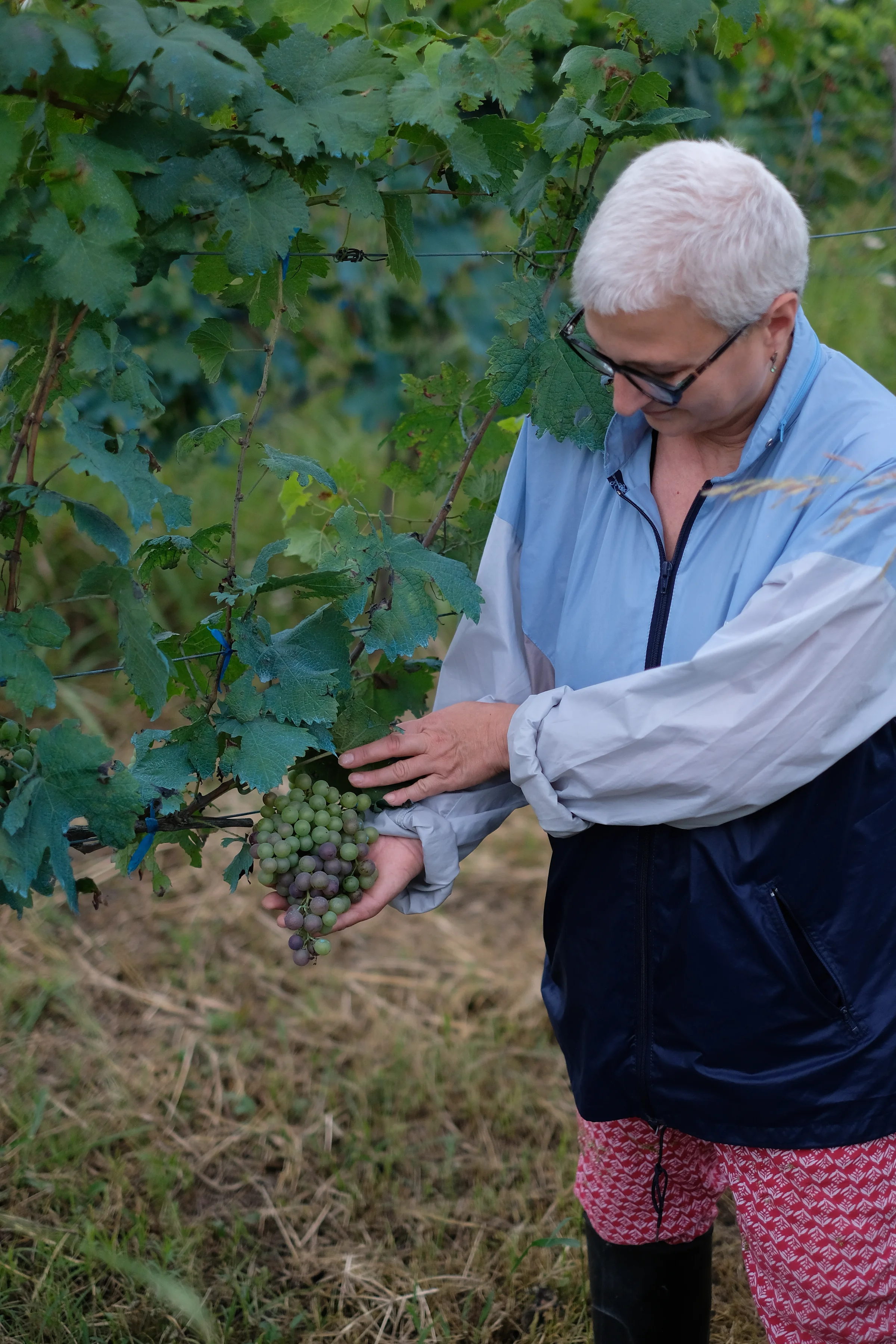
Tako Zhuruli has never been to Portugal. When we asked, she said no, maybe one day, and then explained why that day was unlikely to come soon. Since she and her husband bought the house and the vineyards, she has had no time to travel, but also no real wish to. “I want to always be here, in my vineyards.”
The house is in Ruispiri, a village near Telavi. It was Eka’s recommendation and the last stop of a long day in which we had already visited Kvareli, Gremi and Nekresi. Tako’s family is from Tbilisi. They had no village house, so they wanted a small green place in the countryside where they could spend their weekends. In 2014 they bought this one, and with it a very small, old vineyard planted in the Soviet period. Neither of them had any interest in wine or in growing grapes. Then, Tako began to learn how to make wine and look after the vines. Everything changed. She left her job and her home in Tbilisi and came to live here.
The job had been editing books. Literary magazines still sometimes ask her to write reviews, which she can do in winter. The physical work of the vineyard was new to her. She said plainly that it tires her.
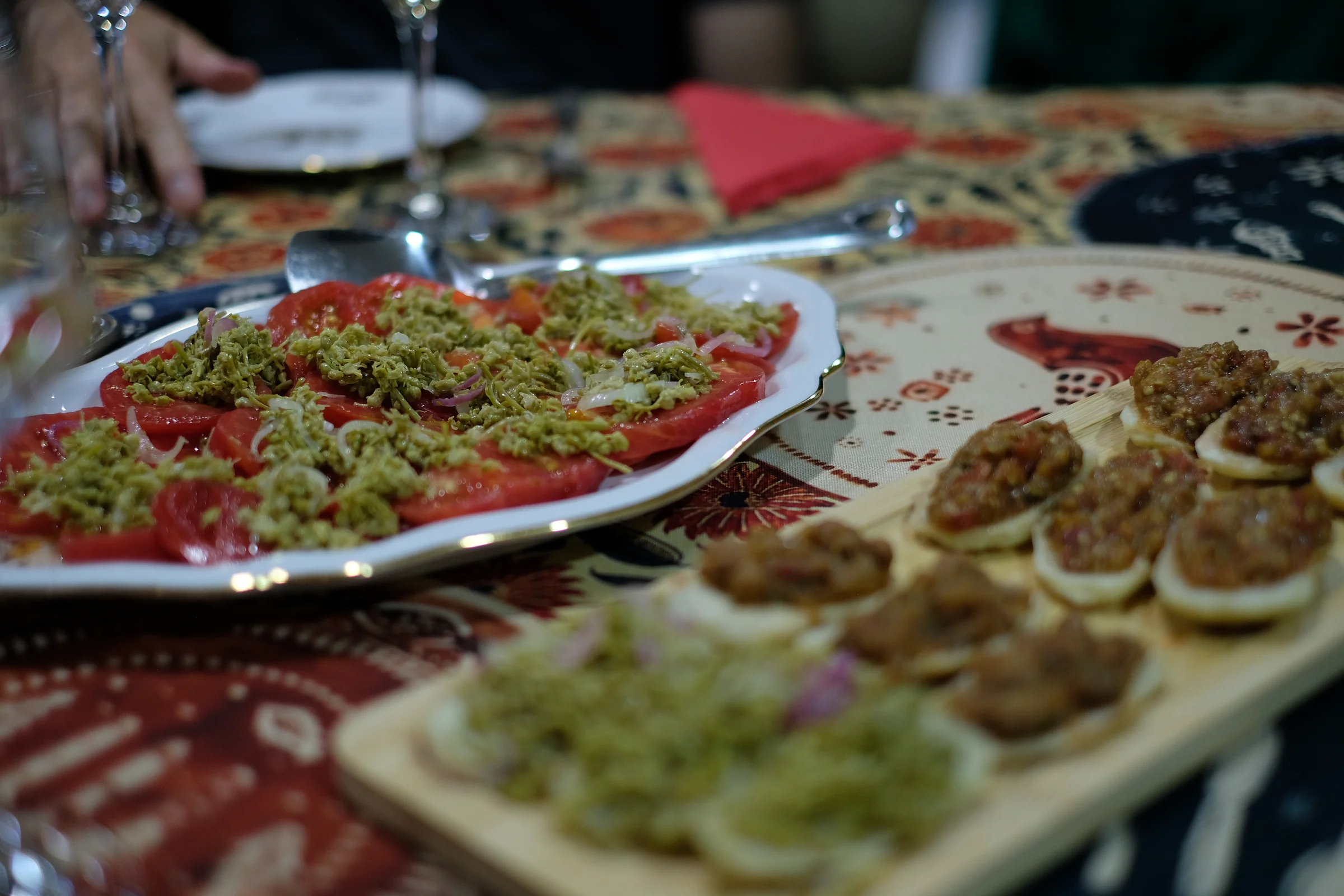
Tako had cooked for us. There were tomatoes, large and deeply red, of a kind that reminded us of the Portuguese ox-heart tomatoes (tomates coração de boi), covered in jonjoli and thin rings of red onion. There were small toasts, some with an aubergine stew, others with beans. There was cheese, churchkhela, and slices of bread toasted with herbs. Her husband, she told us, sometimes says that her wines are better than her cooking. When she arrived she could not cook at all; her mother and her husband’s mother had always done it. She learned Georgian food here, slowly. We really liked her wines. But also her food.
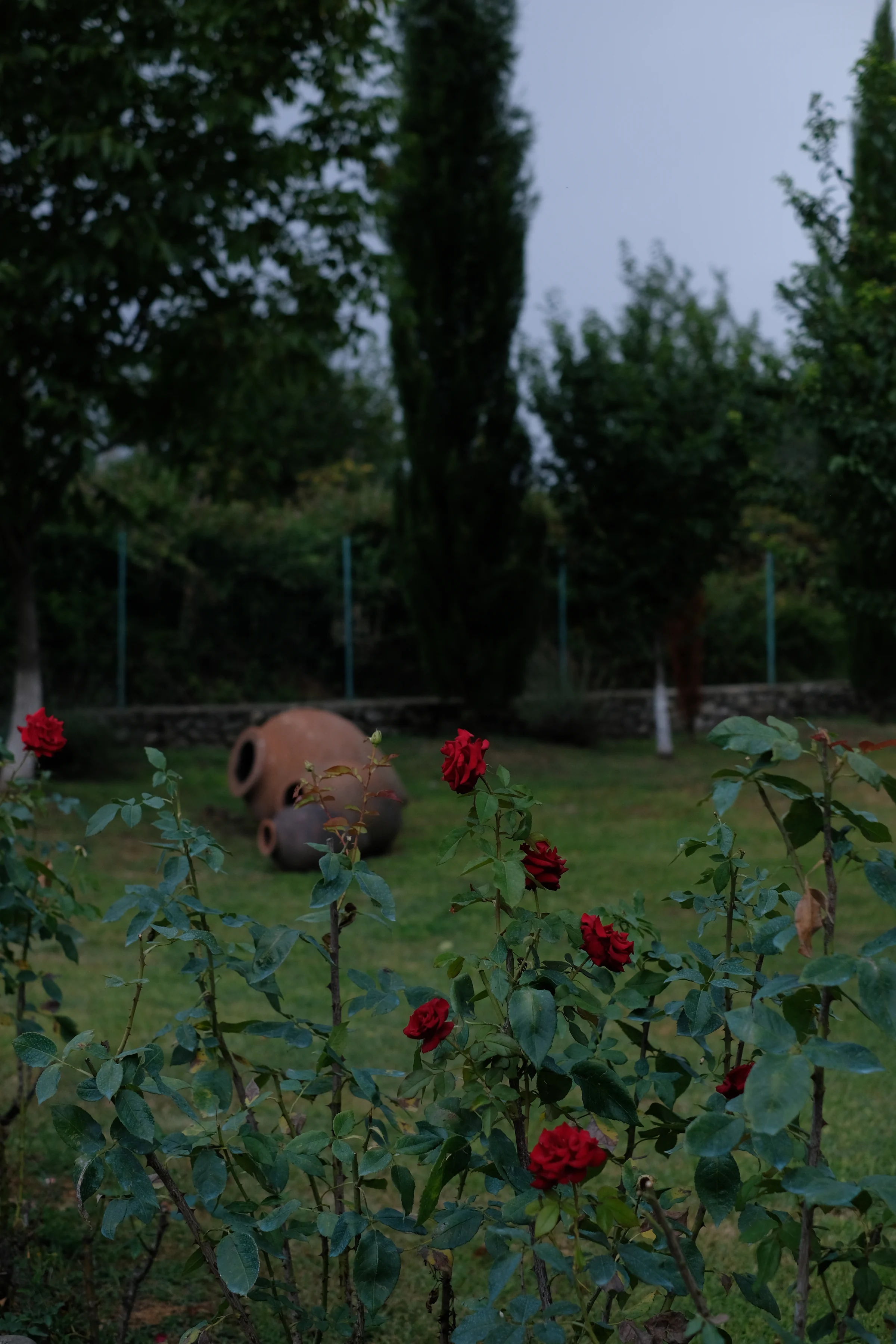
When they bought the house, Tako found ten old qvevris in one of its rooms. She cleaned and restored them, and from 2017 all her harvests went into them. For a winemaker who adds nothing to the wine, a clean vessel is everything, but a qvevri is hard to clean. One summer, while washing them, she understood that she could no longer get them clean enough. She stopped. The 2024 and 2025 wines were made in stainless steel, which is easy to clean and which she described as a great comfort. She also prefers the wines, as they present themselves lighter, without strong tannins.
The rest of the method stayed the same, with the whites spending five months on their skins. Skin contact matters to her, but the place matters more. Her Rkatsiteli and her neighbour’s are the same grape made the same way, and they taste nothing alike. In her village the soil has more clay. She explained why Kakhetian wines keep their skins. The days here are hot and the nights cold, so the grapes come in very sweet, and without the skins it would be difficult to find balance. In Imereti, where we had been earlier, there is more rain, the soil and climate are different, and the wines do not need it.
There are two vineyards, both very small, and in a good year they give about a thousand bottles. “It’s nothing for natural market,” she said. “But for me it’s enough.” About 80% of it leaves the country, for Germany, Denmark and the United States. A larger production would only make her more tired, and she has, she added, a beautiful life.
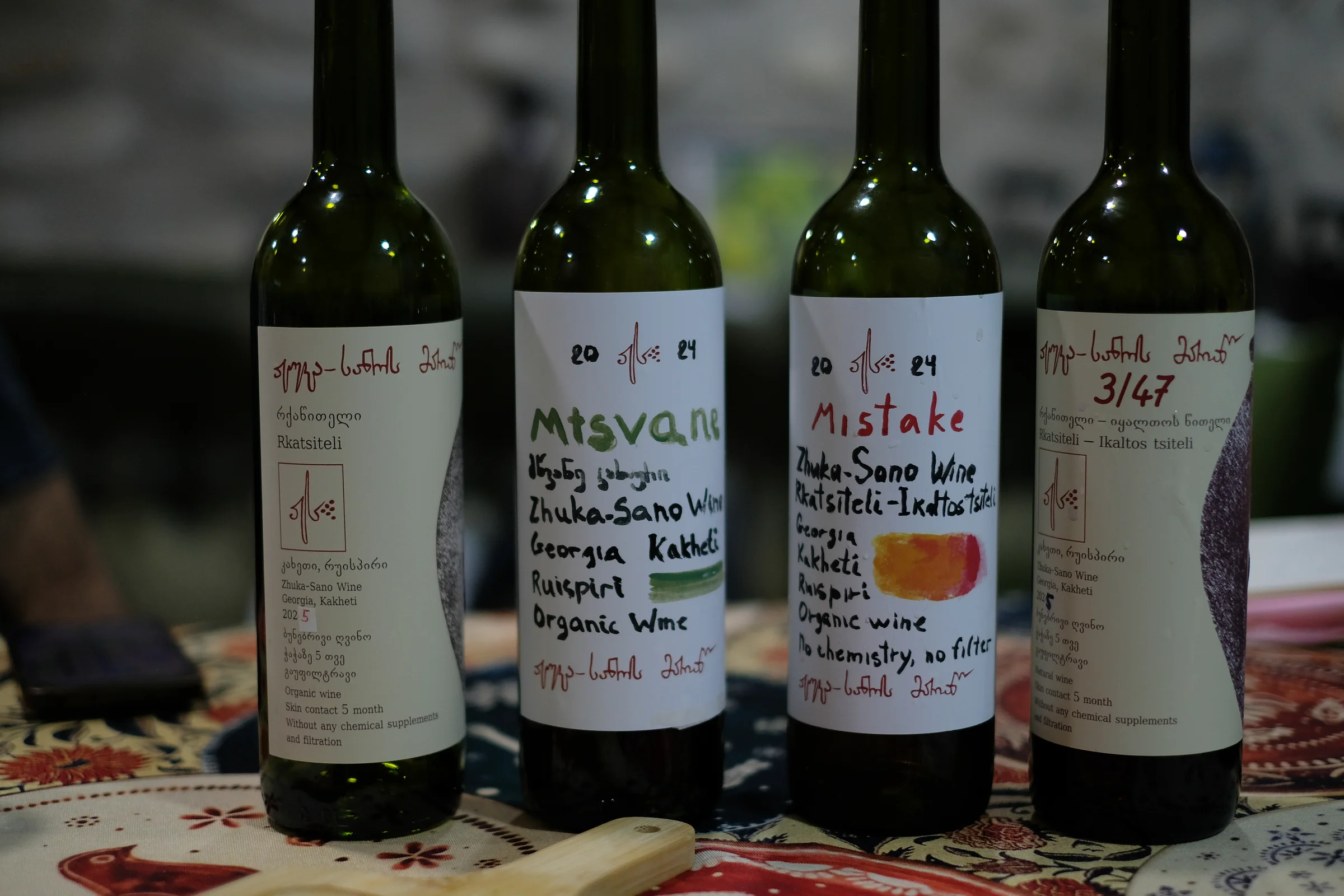
We tasted four wines. The first was the Rkatsiteli from 2025. It was very fresh, with its acidity exactly where it should be, and it tasted of green apple.
The second was Mtsvane, from 2024. Mtsvane means green. At harvest, Tako explained, the grapes are still green, where Rkatsiteli has turned the colour of gold. In the glass, after the same five months on its skins, it was far more amber than the Rkatsiteli, and broader and more expressive, reminding us of yoghurt, ripe peach and fig. The label is lettered by hand, with a single stroke of green paint across it.
The third was called Mistake. It is Rkatsiteli with Ikaltos Tsiteli, a red grape so rare that Tako knows of no one else who grows it. She had meant to make a red, and she got the proportions wrong. What came out was a different wine, with its own colour, aroma and character. It was floral, with peach, and it carried its 14% so lightly that we would not have guessed it. The painted stroke on its label runs from orange into red. It was sold to a Michelin-starred restaurant in Copenhagen, though not at first. The restaurant serves only seafood, and when her importer brought them a bottle, they said they were not interested: a Kakhetian wine, they assumed, would be too tannic for fish. The importer left the bottle anyway. That evening they called back. “Mamma mia, big Mistake”. They took every bottle she had.
The fourth wine was the one Mistake was supposed to be. In 2025 she got the proportions right, and they gave the wine its name: 3/47, three crates of Ikaltos Tsiteli to forty-seven of Rkatsiteli. The wine is a translucent red, with herbs, some spice and nuts, and it was a delight. Several people had told us to expect Kakhetian wines to be bold, even heavy. This one, at 13%, was fresh and balanced.
There is a fifth wine, which we did not taste: Ikaltos Tsiteli on its own. The last vintage came to sixty bottles, and they were gone.
Asked which of her wines she prefers, she could not give a fixed answer. The wines keep changing in the bottle, and her preference changes with them. In autumn it had been the first; now it was the Mtsvane. In a few months, she said, it might be another.
It had rained heavily the day before, and the path to the vineyard was deep in mud. We walked there anyway. The Ikaltos Tsiteli grows in six rows, and its berries had just begun to change colour. Tako was delighted, as if the vines had timed it for our visit, and she held up a bunch for the camera. The Rkatsiteli, the old vineyard, is further away.
She described the month before harvest. From the beginning of September she walks one row a day. One row a day is enough to cover both vineyards in a month, and when the harvest comes the vines are healthy. She uses no heavy chemicals in the vineyard. No sulphur goes into the wine; the only sulphur near it is the diluted solution she uses to wash the bottles. Hail had come through three times this year, and the vines showed it.
The harvest itself is in October. Her neighbours spend two or three days picking; she needs about two hours. They start in the morning and are finished by one. She pays neighbours to help cut the bunches, and stands at the end of the rows to sort them.
Since 2017 Tako has kept a journal of the vineyard and the cellar. Friends in the Georgian Natural Wine Association keep telling her to publish it. She doubts it matters enough. “I’m not Ramaz Nikoladze,” she said, laughing. In any case it would need free time, and, currently, she has none. One entry, from 8 November 2023, records her joy that Georgia had been given its candidacy for the European Union.

“This place is like home for me,” she said among the rows, and added, after a moment, “and the silence.” We smiled and we nodded.