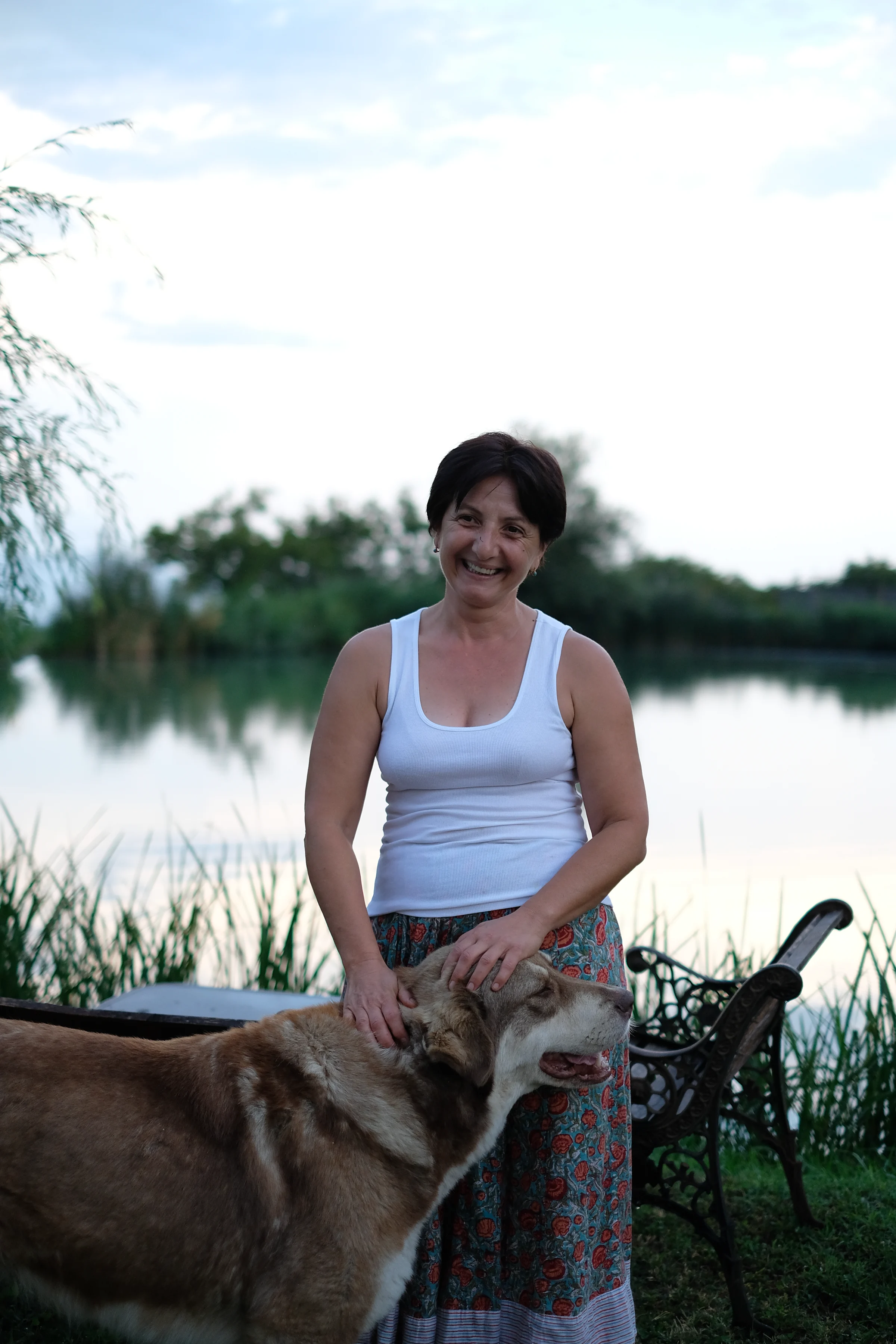
We stayed at Two&Half Qvevri for five nights, long enough for the place to stop being an arrival and become, briefly, the shape of our days. We woke to the lake, found the dogs outside and went to see what Ekaterina Bugadze had made for breakfast.
She was Eka to everyone.
The first evening began with dinner. We had only just arrived, but the table already made the house feel less like somewhere we had booked than somewhere we had been expected. The food was homemade and exceptional. At its centre was a tomato salad that became one of the meals by which we remember the whole trip: large, deeply flavoured tomatoes from the garden, with coriander, garlic, vinegar and the flavorful Kakhetian oil.
The ingredients were simple enough to name. What was harder to account for was the completeness of it, the feeling that nothing on the plate needed to be improved. We told Eka the next day how much we had loved it. She seemed pleased, and slightly surprised by how insistently we kept returning to it, and said she would make it again. The following morning it was on the breakfast table.
Breakfast never repeated itself. There was always matsoni, the Georgian yoghurt Eka made herself from milk bought from someone she trusted, and alongside it something new each morning: a tart one day, a cake the next, then some other small pleasure. Five mornings were enough to see that nothing about it was fixed: Eka was waking early and deciding, each day, what to make for the people in the rooms.
She had five rooms to think about, as well as the meals, the laundry, the garden and the constant sequence of arrivals and departures. During our stay, we watched her move from one need to the next with very little help. A guest appeared with clothes that needed to be washed; someone else had a question; food had to be prepared; one room was emptying as another filled. Eka received each interruption as if it were the only thing requiring her attention, although we could see that it never was.
Her day began at half past five. She exercised first and started work at six. She had been an early riser since she was twelve or thirteen, and described it as her biological rhythm. By ten at night, she joked, she was no longer any use. When she could, she swam in the evening and worked in the garden. Then the next morning began at half past five again.
The garden was not a picturesque border around the business. It entered the kitchen. Tomatoes, aubergines, cucumbers and courgettes grew there, as did peaches, quinces and cherries. Sunflowers had reseeded themselves after a night of wind flattened the previous year’s plants. There were chickens, roses and new trees still small enough for Eka to describe what she hoped they would become. What the land could not provide, she tried to buy from people in the surrounding villages whose work she knew: good cheese, good milk, butter and oil she would be happy to eat herself.
That was her measure of quality. She would not serve another person something she would not eat. “I am human and other people are human,” she said.
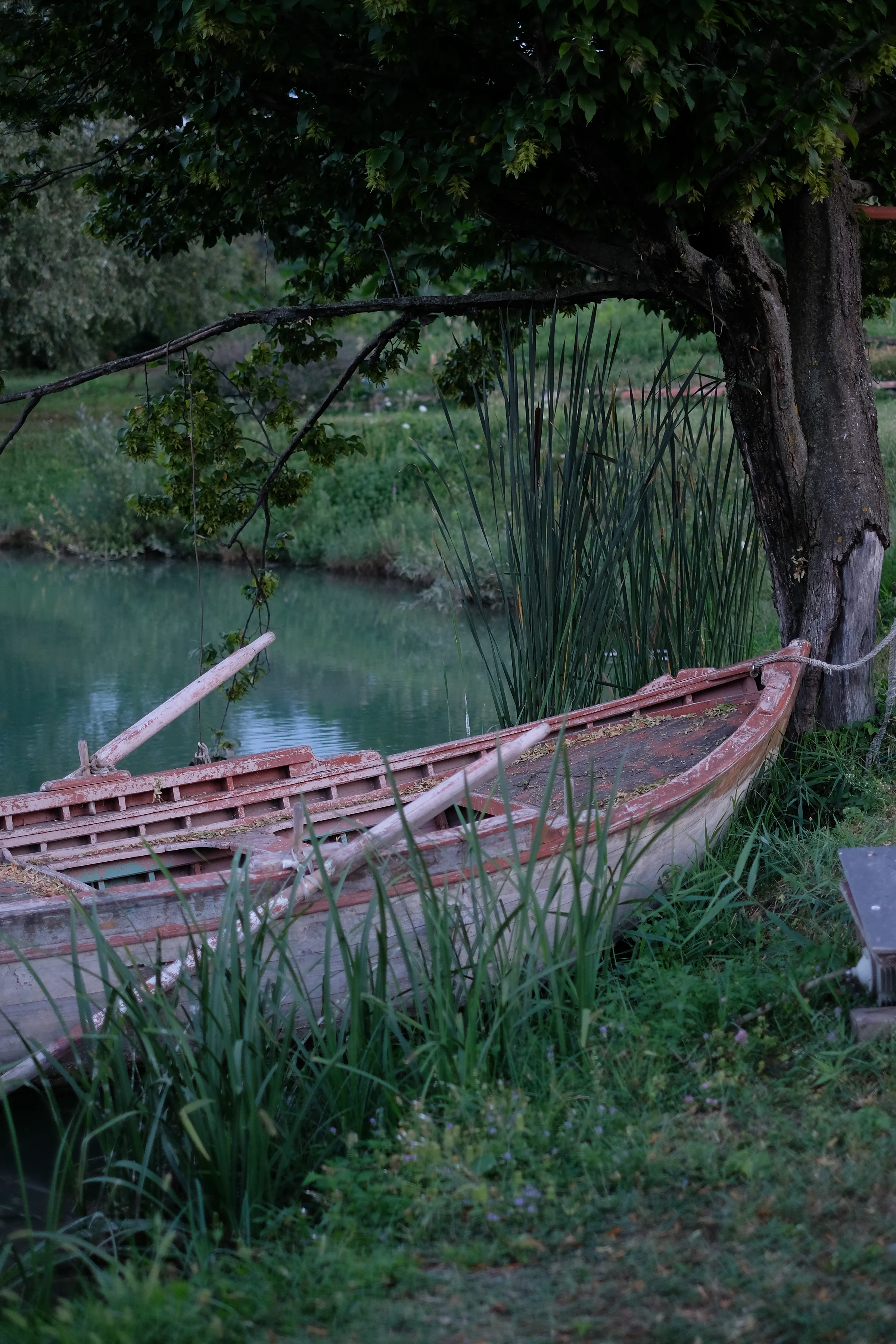
Eka and her family are from Tbilisi, and her brother had wanted to buy something in Kakheti for their large family. He found land beside the lake, but what is now garden and open space was then so overgrown that heavy machinery worked for a month to clear it. The family first imagined a place for themselves. Only as they began making it did the idea of receiving guests take shape.
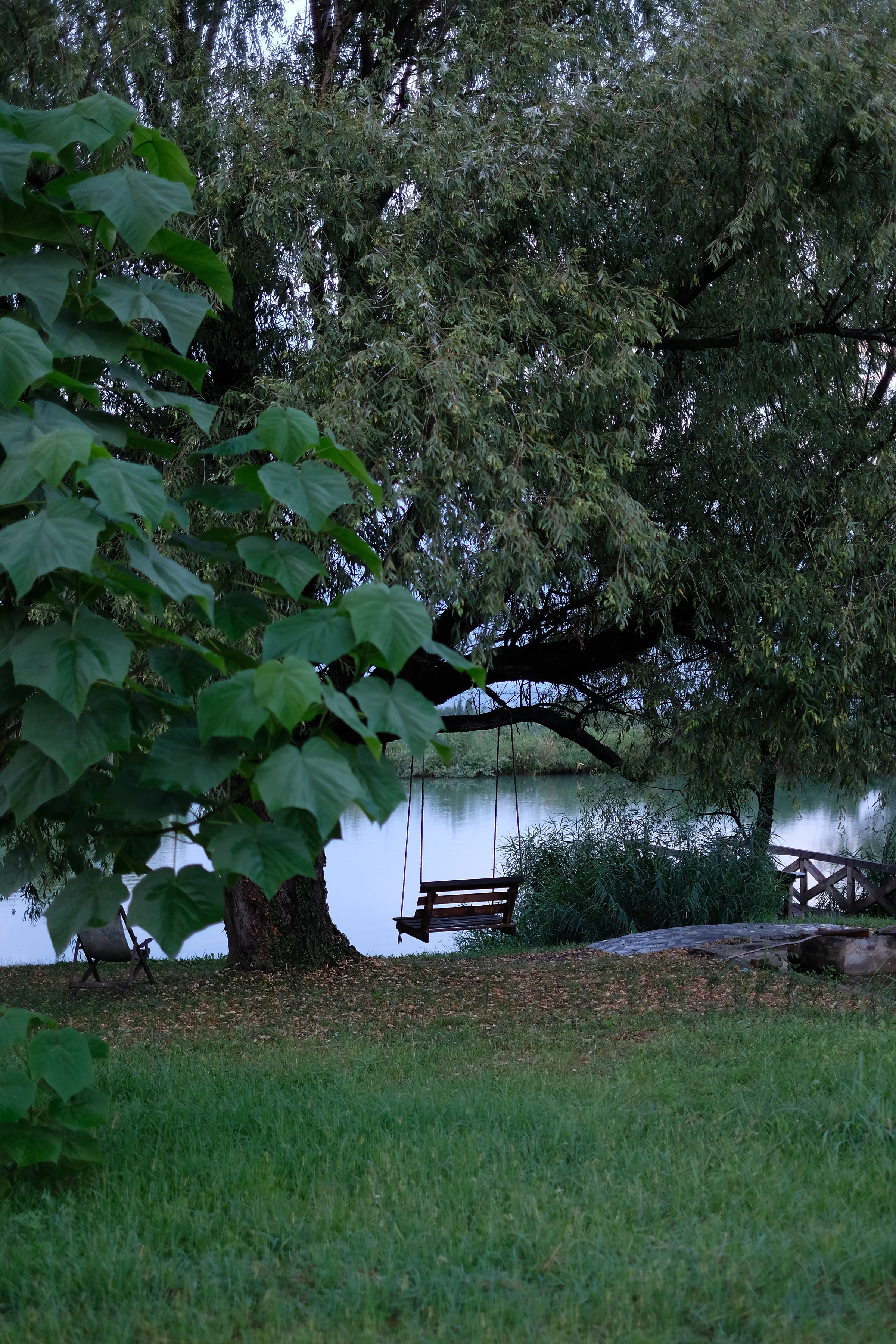
Her brother supported the project and asked Eka whether she wanted to move to Telavi. She did. Tbilisi had become too noisy for her. Here she woke to fresh air and to a landscape that changed with the season and the day. She called those changes magical. It was easy, looking out towards the lake, to understand why she had stayed.
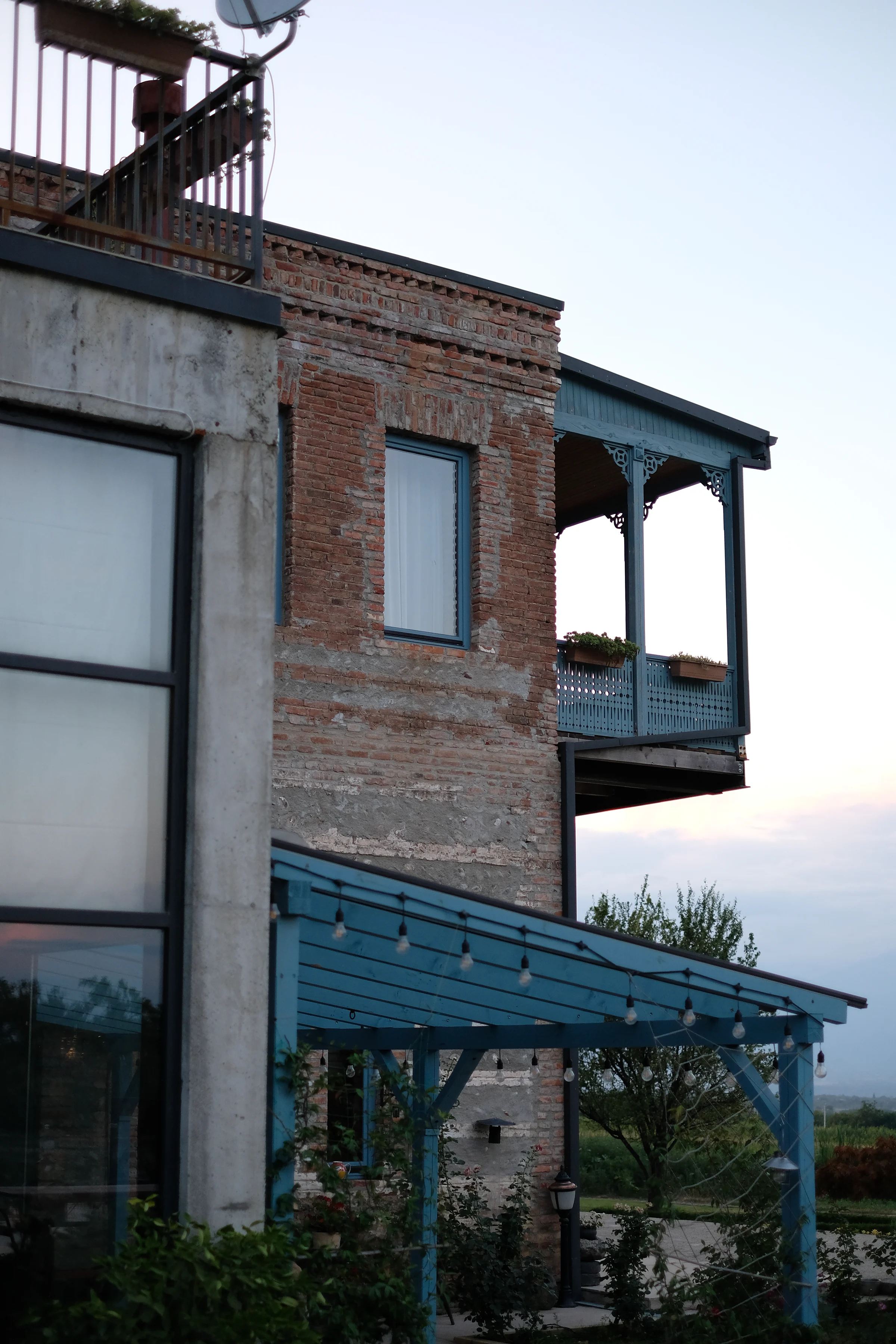
She had never trained for a hotel or restaurant. Before Telavi, she had worked in the family furniture business, which began in 1990 and imported furniture from Italy. She left it two or three years before the move. What she brought from that work was an eye for how a room should feel.
The dogs belonged to the landscape as completely as the trees and water did. There were three at the house when we arrived. Busa and Gildi were the large females, mother and daughter, although Gildi, the daughter, had grown larger than Busa. Who the father was, Eka said, laughing, nobody knew. Bibi was much smaller and restless, rarely where he had been a moment earlier. During our stay, another small dog arrived: Bubu. They followed movements through the garden, appeared beside conversations and became part of the small daily familiarity that five nights allows. By the end, looking for them outside felt like another way of checking that the morning had begun.
The name Two&Half Qvevri also points towards wine. At the time of our visit, the family had been making it for two years. There were no vines on the property when they started, so they bought Rkatsiteli and made the wines. Eka poured two: a still white and a pét-nat. The white had weight without heaviness, the kind of wine that could remain at Eka’s table without demanding that the conversation stop for it. The pét-nat saw us through another late afternoon, drunk as the day softened around the lake.
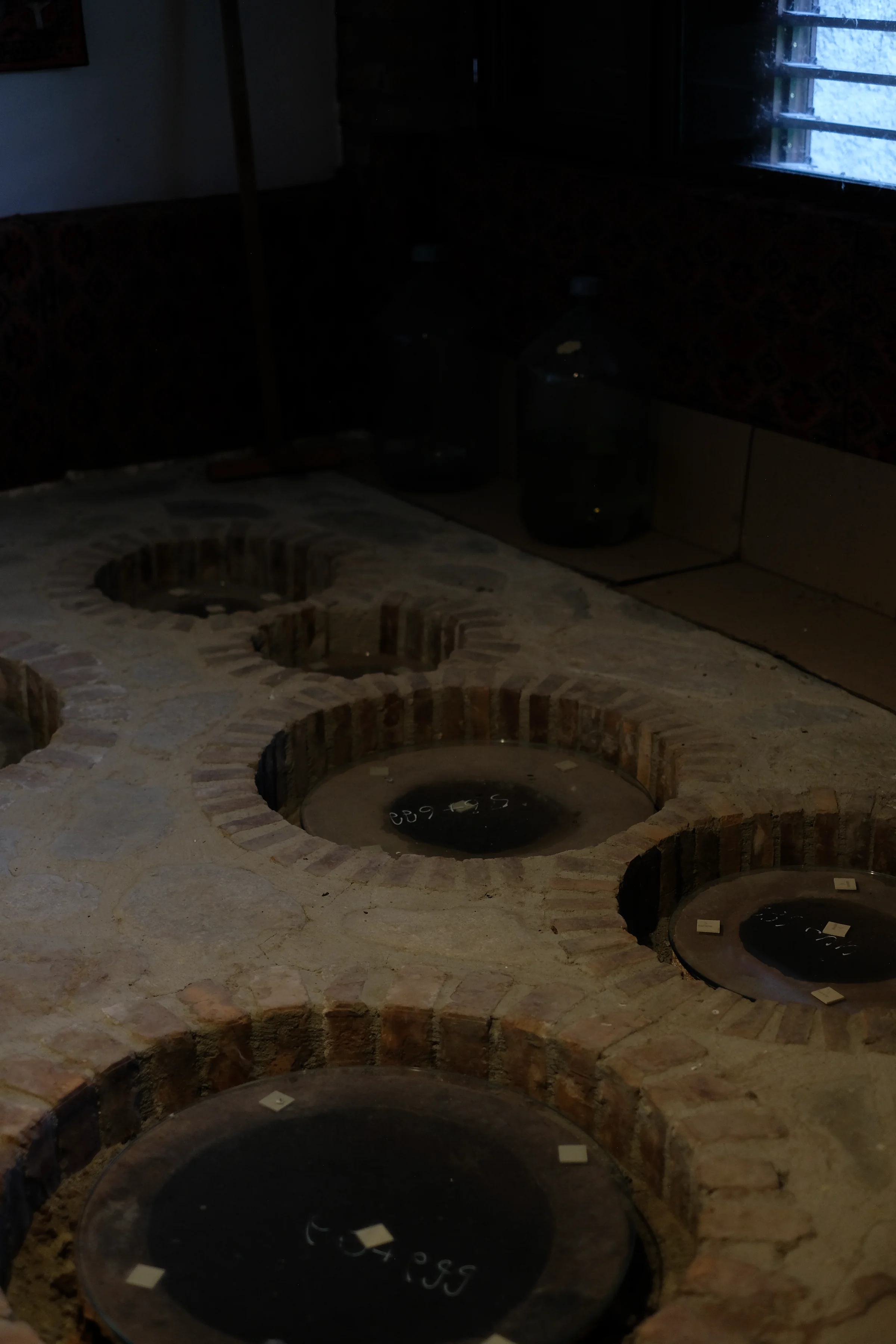
The family also made chacha, and Eka preserved peaches from the garden. Their own production was still young, another part of the place being worked out as it grew.
Nothing about Eka’s hospitality, however, felt unfinished. She knew exactly what she wanted the relationship with a guest to be. A standard hotel, as she described it, kept that relationship formal and predictable. Hers was different: “Now you are my guest. This is your house.” People arrived as customers and left as friends, she said, and kept writing afterwards. The communication with people from other places and cultures was what made the work interesting to her. It was, she said, the job she loved.
Before we left, Eka gathered gifts from the house: wine, chacha, and a bottle of the Kakhetian oil that had dressed the tomatoes on our first night. Giving seemed the natural conclusion to receiving us. After five nights, we left the way one leaves a house in which one has been allowed, for a little while, to belong.
Some places look like paradise because the work that sustains them stays out of sight. We stayed long enough to see it, and to see how much of it rested on one person. The lake was part of what made the place beautiful. The rest was her.