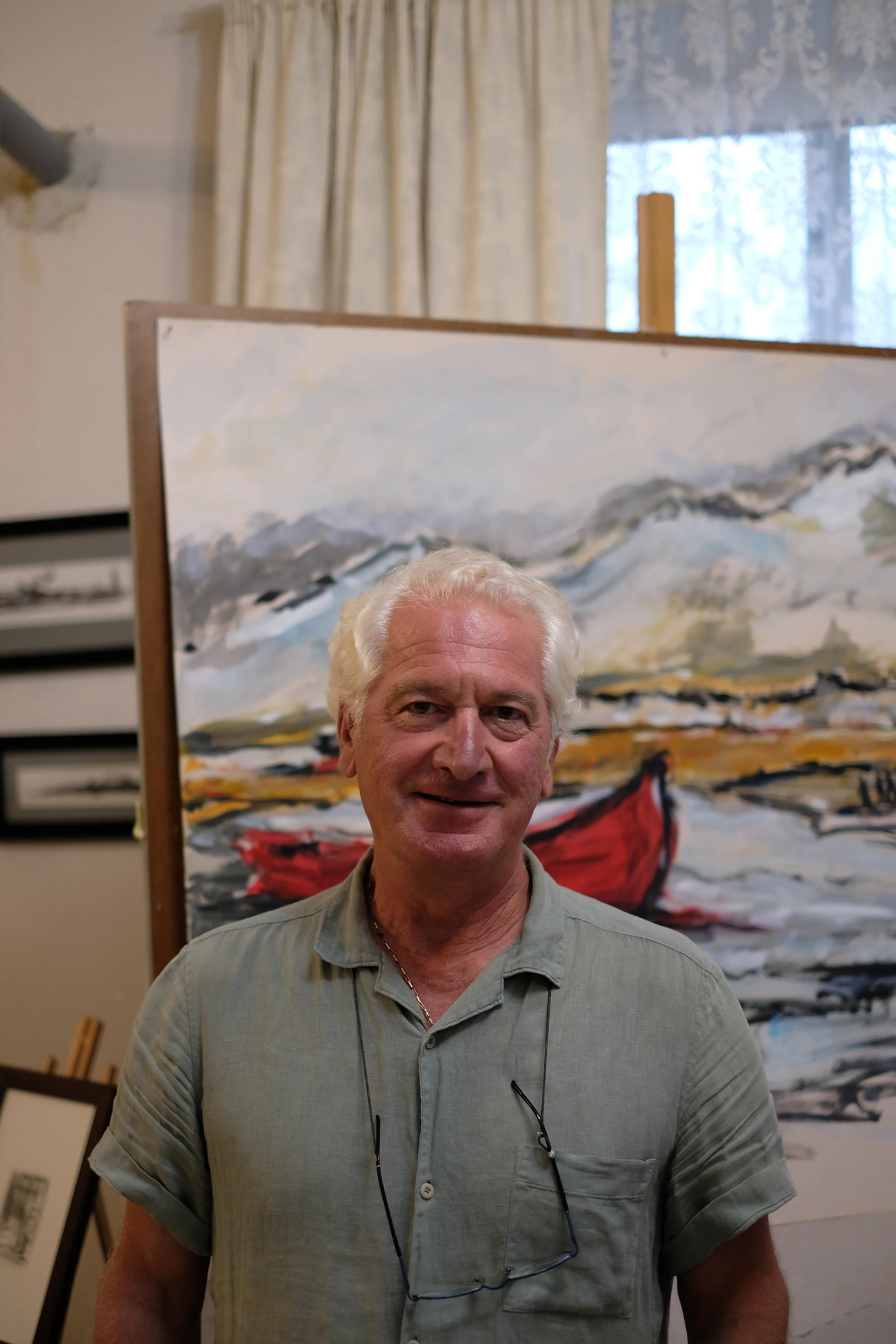
It was Eka who sent us to Gia Togonidze. His winery was a few kilometres from Two&Half Qvevri, and she recommended his wines to us. He is a good friend, she said, smiling. So we contacted him through WhatsApp and arranged a visit, which would include tasting and dinner.
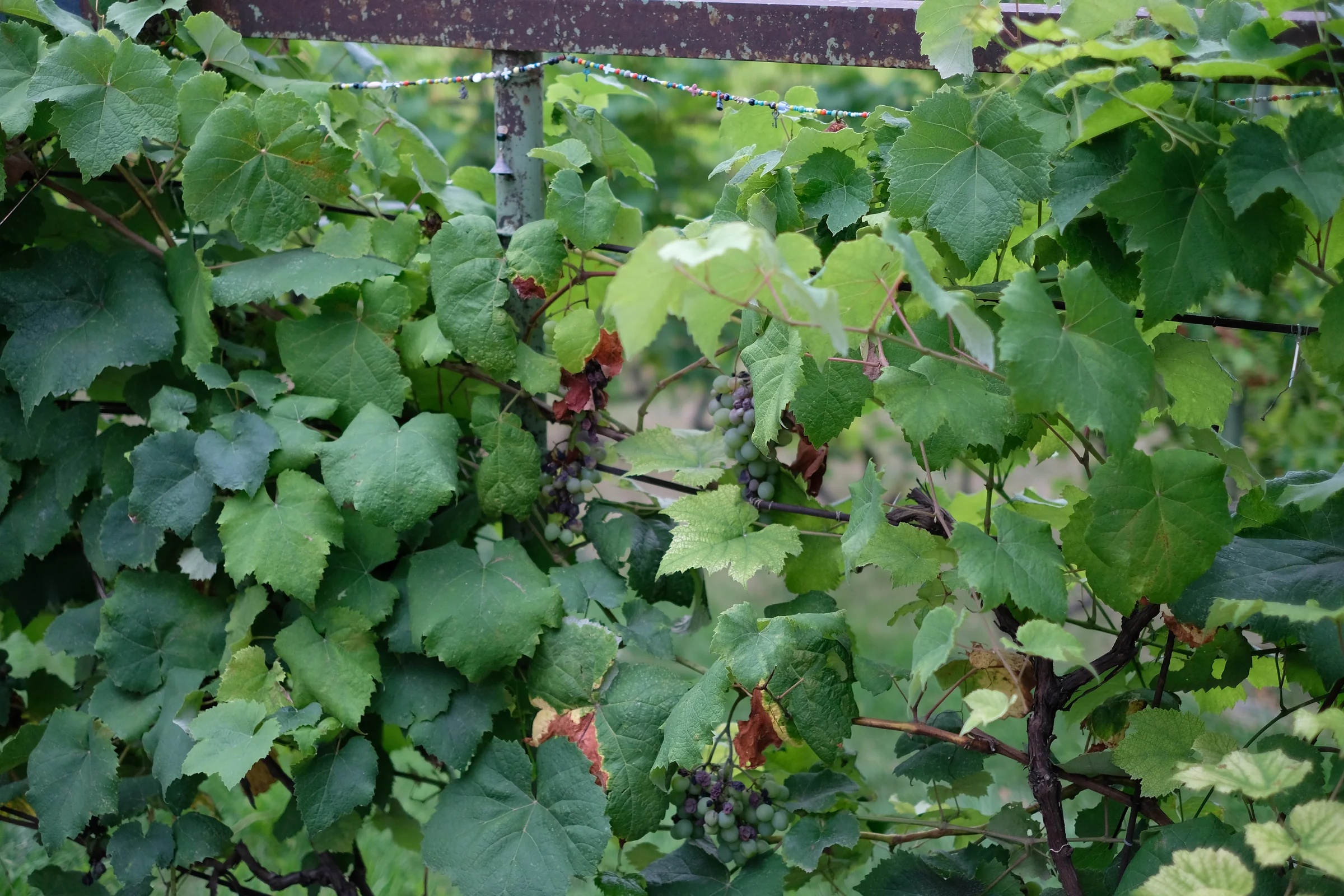
We arrived while the light was still good, so before anything else we asked whether we could photograph the vines. Gia took us into the small vineyard beside the house. Most of his vines are in the valley below, where most people around here keep theirs. The rows by the house were few, and one of them held the grape he most wanted us to see.
“This is very old,” he said. “This is from Racha.” Pigeon’s Foot, harvested in October. We had never heard of it, and we did not come across it again anywhere in Georgia.
Racha is where the Togonidze family comes from, in the mountains of western Georgia, above Kutaisi. Gia counts four generations of winemaking. As a boy he worked in the cellar with his father and his grandfather. His father selected grapes professionally and relatives in the west still keep vineyards there. Gia bought this property in Kakheti fourteen or fifteen years ago. Kakheti, he said, is the best region for wine, and it is closer to Tbilisi, where he lives.
The conversation passed through several languages and several people. Gia understands English but prefers German, which he learned at school and used during his exhibitions in Austria.
He makes between seven and ten thousand bottles a year, white and red. Half are sold in Georgia, and much of the rest goes to the United States. There are qvevri in the cellar, but he does not treat clay as an obligation. Even his amber wines sometimes ferment on their skins in stainless steel. It depends on what he sees in the grapes that year.
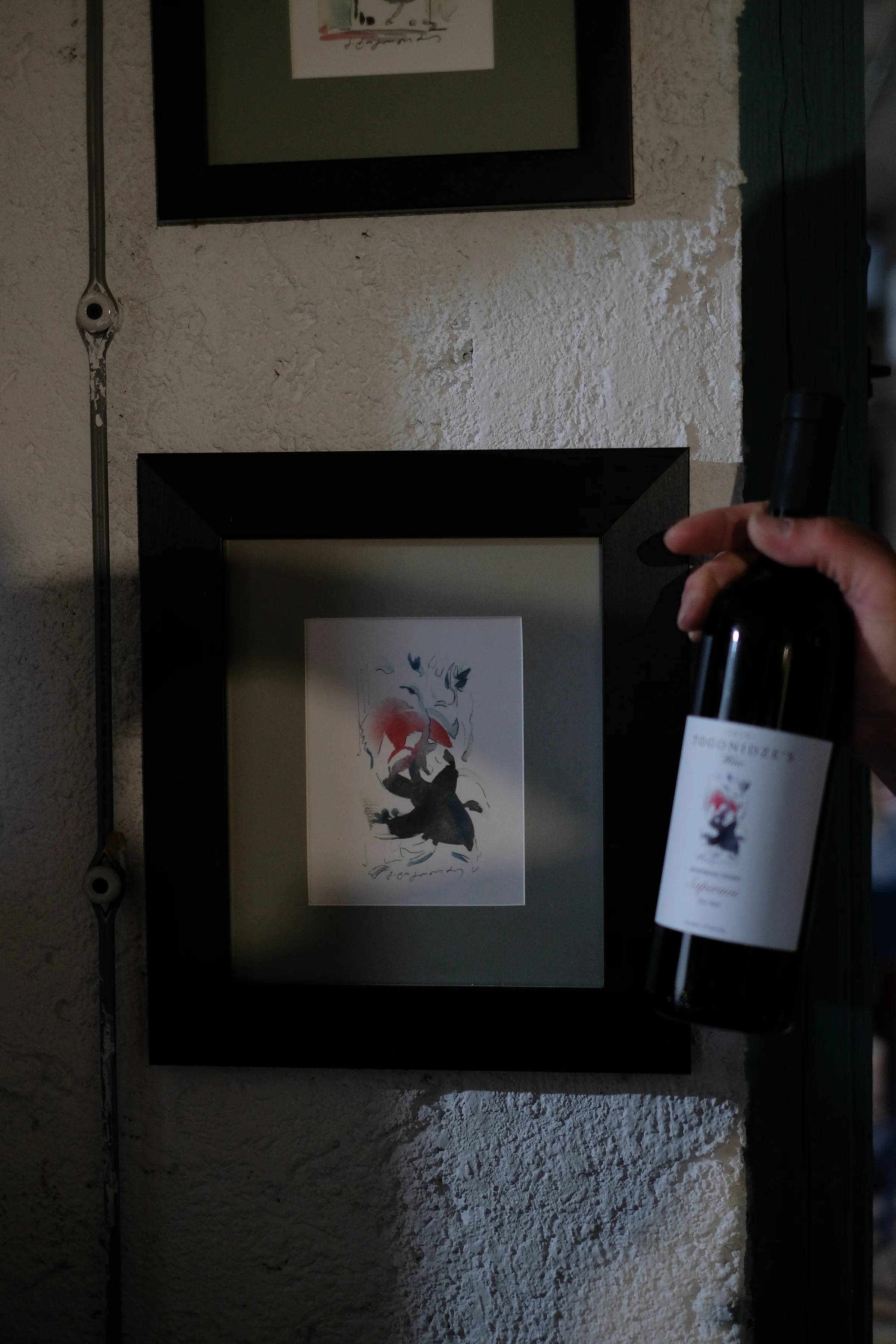
Gia is a professional painter, with his gallery and studio in Tbilisi. The house is full of his paintings, and every label is his. Each vintage has a different one. “One year, one label,” he said, taking bottles down to show us how they changed.
We tasted in a room beside the cellar, at a table laid with cheeses, among them one from Marleta’s Farm nearby and a Tushetian guda. Gia decided which cheese went with which wine and was very precise about it.
The first wine was Kakhuri Mtsvane 2022, “Kakhetian green”, as Gia translated the name. It was made without qvevri and left on its skins for four months: not very acidic, but mineral and citric. Next came a blend of Rkatsiteli and Mtsvane from 2023. Gia called his blends cépage, borrowing the French word. This one had spent two months in qvevri and was more amber in the glass, with an expression of fig, peach and dried fruit.
Before the third, Gia stopped us. “Please, no cheese, no bread.” It was a Rkatsiteli from 2014: six months on the skins in large tanks, no qvevri. The colour was deep orange and the nose revealed citrus and dried orange peel, yet the wine was surprisingly light. All through Georgia we had been asking producers how their wines aged, and hardly anyone kept old bottles to show us. This was the oldest wine we had tasted.
A Rkatsiteli from 2021, made in qvevri with three months on the skins, had more acidity. The last was Rkatsiteli and Kisi from the same year, fermented together, showing fresh herbs and pear.
Every wine came with a toast, and every toast had its own subject: peace, love, family, later our two countries. Gia raised each glass as if the occasion was a celebration.
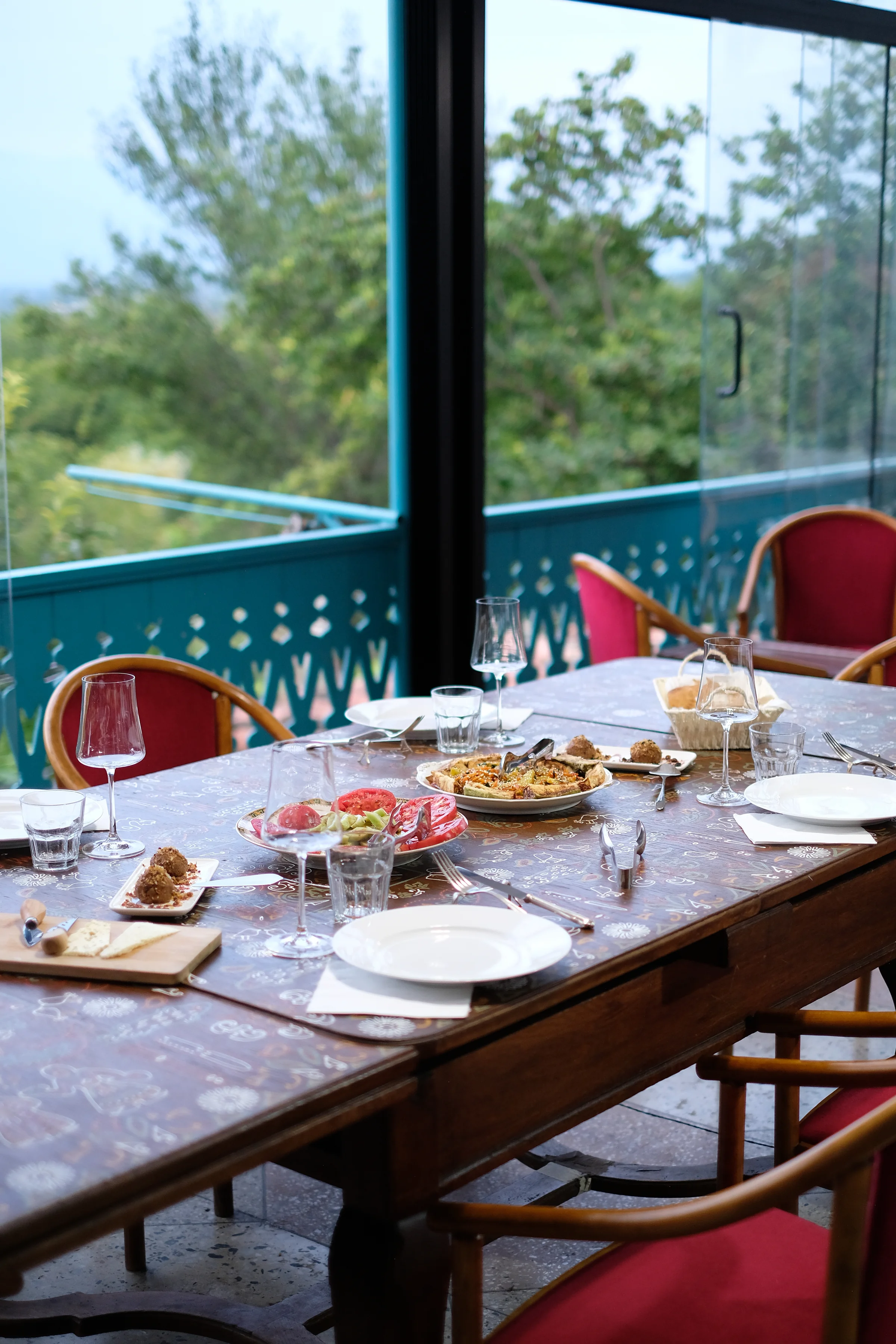
Dinner was upstairs, in the main house. We walked through rooms hung with his paintings, and sat down at a large table on the terrace that looked over the vineyards. Gia’s wife had cooked, and she is a remarkable cook. It was one of the best meals we had in Georgia, which is saying a great deal.
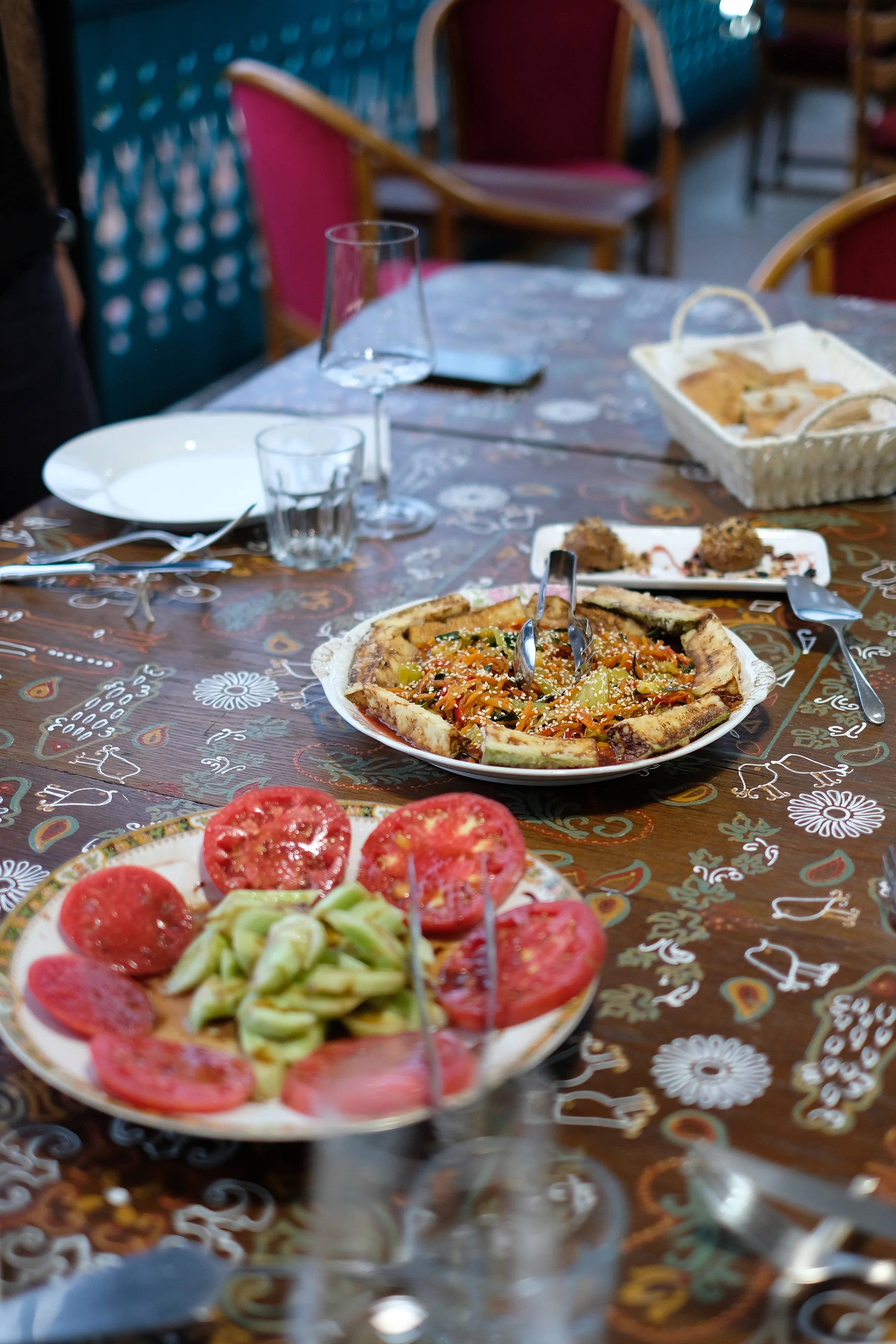
The tomatoes came first, thick slices around a pile of cucumber, with a dark dressing and an incredible depth of flavour. Golden strips of fried courgette ringed a salad of shredded carrot and peppers in a sweet-sour dressing, covered in sesame, with a taste of anise. The mushrooms had been baked with cheese in a small dish, and they were so aromatic that we were certain they had been finished with truffles. “From here,” Gia said. “No greenhouse.”
Then the pork: thick slices with a red glaze and potatoes. It was the best thing on a table where everything was great, and the potatoes took one of us straight back to a grandmother’s kitchen.
With the food came Mtsvane and Krakhuna 2023, greener and fresher than anything we had tasted downstairs, a wine for the table. Then Saperavi 2019, raised in qvevri and wood: dry, smoky, with green pepper. Saperavi and Rkatsiteli are the two grapes Gia speaks of most fondly. To finish, a semi-dry Pigeon’s Foot, opaque, with strawberry and liquorice and its sweetness held well in check. It was a powerful wine, and it came from the vines Gia had walked us to first, at the start of the evening, while there was still light to photograph them.
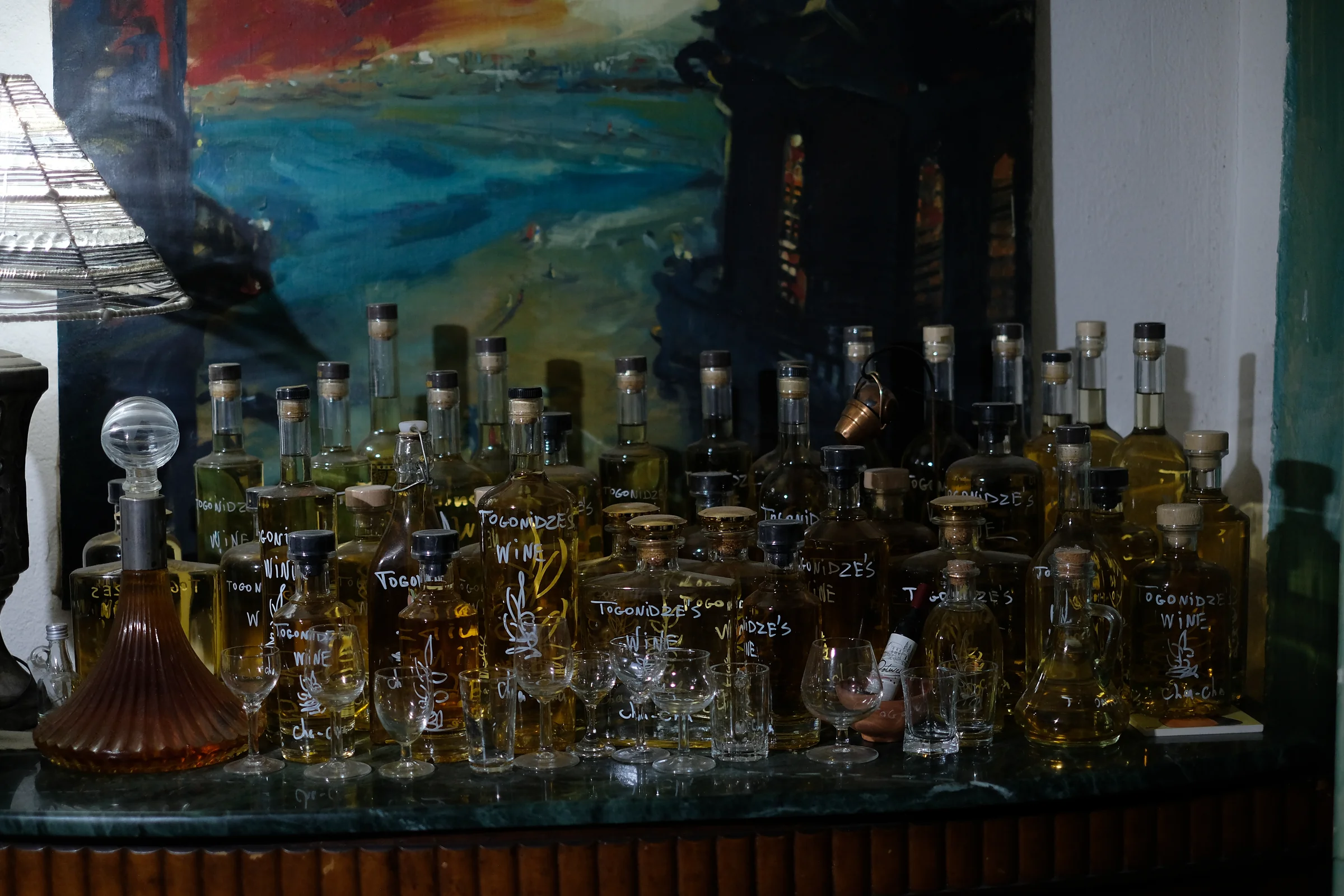
Before we left, Gia took us into a third room, the one he keeps for chacha. Dozens of bottles stood on a marble top beneath one of his paintings: some barely tinted and others deep gold. Each was lettered by hand in white, Togonidze’s Wine, Cha-Cha, with a small painted vine. He sent us away with two bottles. One was chacha, which we have been drinking in Portugal ever since, slowly. The other was a Saperavi. It is still waiting for its dinner.