We had left Two&Half Qvevri that morning with a driver who was taking us to Tbilisi. Artana was a detour. We had arranged it with Keti over WhatsApp because that morning was the only one on which our schedules met.
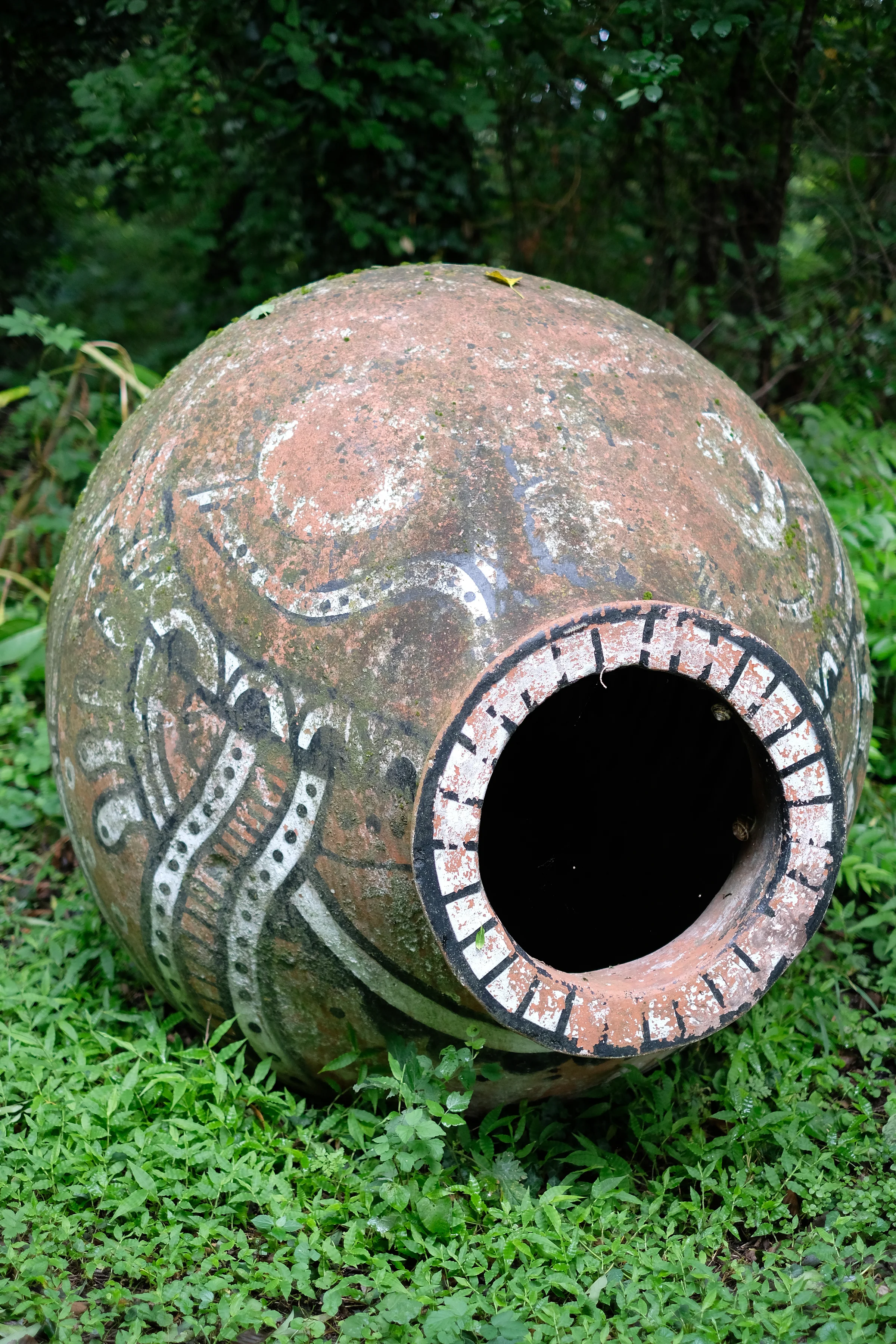
The gate opened onto green. After a week in Kakheti, where we had learned to expect sun and dry heat, Artana was humid and dense, closer to a forest than to the open vineyards we had been driving past. The garden was immense and divided into corners, with tables and chairs. A painted qvevri lay on its side among the plants. What stayed with us longest was the smell of wet earth, leaves after rain. We told Keti that we had imagined the region as dry. Parts of Kakheti are, she said, but here it rains. In a normal summer it is forty degrees. That year it had been raining, almost without a break, for five months. She said that they were living in Macondo.
We strolled through the garden while Keti was finishing a wine tasting. French guests had been expected at eleven. They had arrived a bit late and could not bring themselves to leave. Keti apologised for the wait. It happens all the time, she said: it is so peaceful here that people stay.
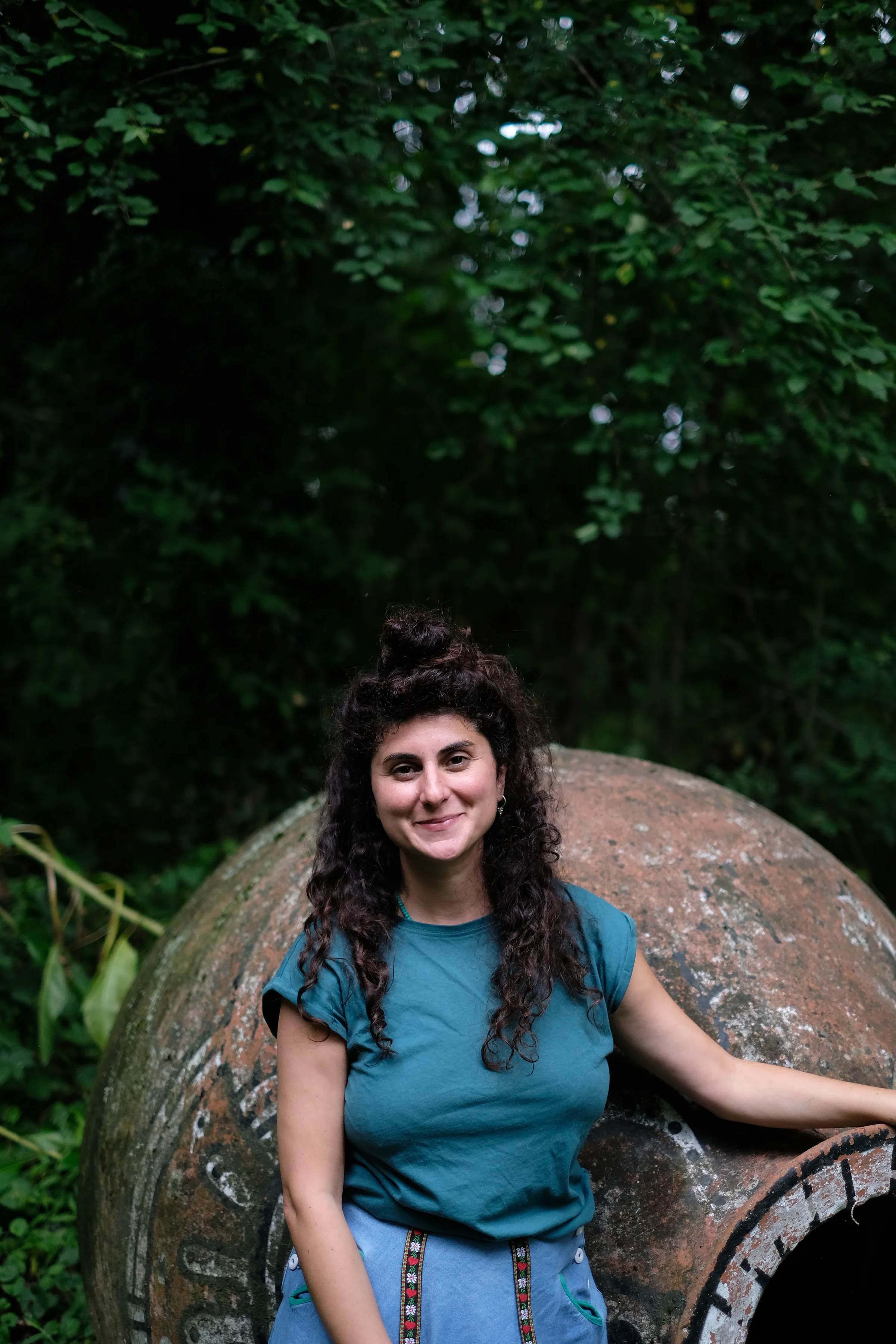
Keti Berishvili’s intelligence was visible before she had said very much. It was in her eyes, bright and amused, and in an attention that missed very little. She read a situation almost as soon as she entered it. Through the morning she moved between English and French, and she followed our Portuguese, spoken quickly and among ourselves, better than we expected.
Ketevan, she told us, is the original name. People shorten it to Keti, or Keto. Gogo means girl. It also means daughter, and the double sense is deliberate, because it was her father who started all of this. “I’m my father’s daughter,” she said.
The family is from Tbilisi, and her father’s grandfather came from Racha. In 2000 her father and his friends began travelling through the east of Kakheti, looking for land and vines and somewhere to settle. They tried another place first, half an hour from here, and then found this one. For some years they made wine and drank it for the pleasure of it. Between 2006 and 2008 it became serious. Her father is one of the pioneers of natural wine in Georgia, and he and his friends were among the first to take Georgian wines abroad, to Italy, France and Japan. He co-founded the Natural Wine Association and Vino Underground in Tbilisi. His name is Kakha, which, Keti laughed, causes some trouble with Italians.
For years Keti only helped, at harvest or with the bottling. She worked in a bank. In 2015 she joined her father. They work almost exclusively with their own grapes, because, as she put it, it is her father’s philosophy that wine comes from the vineyard, and that you have to know your grapes well to be able to vinify them.
The vineyard does not make that easy. In 2020 and 2021 hail and mildew took everything, and they made wine from grapes given by friends. In 2023 the same happened, and there was nothing to replace them with, so they decided to make no wine that year. A few days before our visit another hailstorm had come through. Their treatments are living bacteria that feed on the harmful ones, and they have to be sprayed early in the morning or in the evening to work. With rain every day, they would spray and the rain would wash it off, and they would spray again. Of the last six harvests, only two had been good. If they wanted to survive this year, Keti said, they might have to look for certified grapes from vineyards that had been treated, or stop. “When you are working in the vineyard and not only in the cellar, you are working for the vineyard.” All the income goes back into it. They usually make around three thousand bottles. Once it was six or seven thousand. Some years it is none.
Most of what she makes goes abroad, to Catalonia, France, Denmark, Sweden, the Netherlands, Austria, the United Kingdom, Mexico and Japan. Very little stays in Georgia. She handles the shipping herself.
We had told Keti that one of the things we kept finding in Georgia was women making wine, something we had read was rare only ten years ago. At Gogo, that morning, the table was made of women. Keti’s father was around, but busy. Her sister, Elene, and her mother sat down with us.
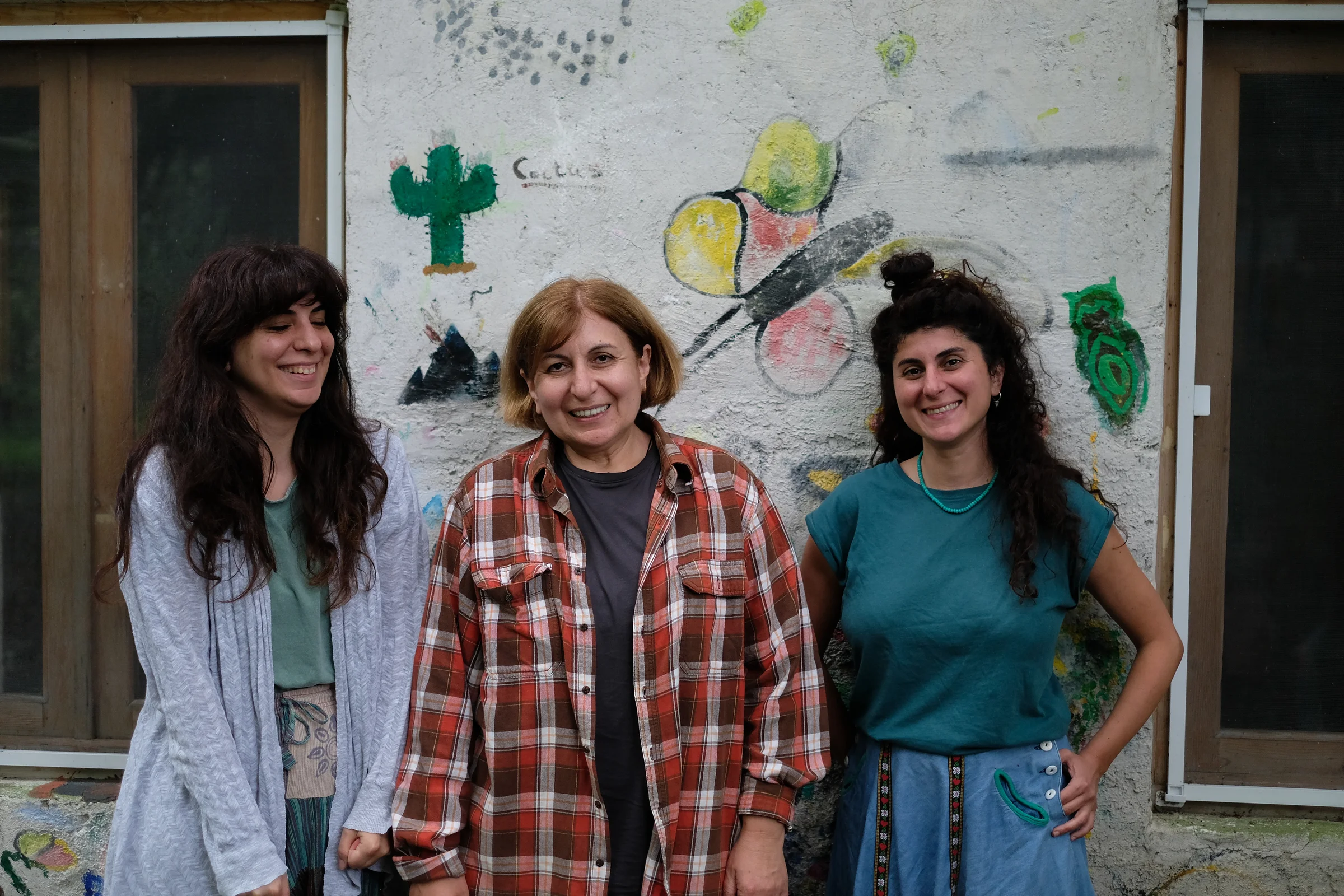
Her parents met at the conservatory. Her father trained as a violinist and sang polyphonic songs. He no longer plays professionally, but every year he takes up something new to learn, the accordion one year, the guitar another. Her mother still sings, and still works at the conservatory and in opera houses. She has travelled a great deal. Elene makes the family’s chacha.
Keti lived here for six years, until her daughter started school. School is in Tbilisi now. In summer, when the holidays are long, they are in Artana. The rest of the year Keti splits the week, driving out on Fridays and back on Monday mornings. She called it a compromise. Teaching her daughter at home would have meant giving everything up to it, and she thinks children need other children.
Keti went to a French school in Tbilisi, and she also speaks Italian and Spanish. Brazilian Portuguese comes more easily to her than ours: she grew up, like us, on Brazilian telenovelas. She had been to Portugal once, to Lisbon, in November, on São Martinho, when the chestnuts are roasted.
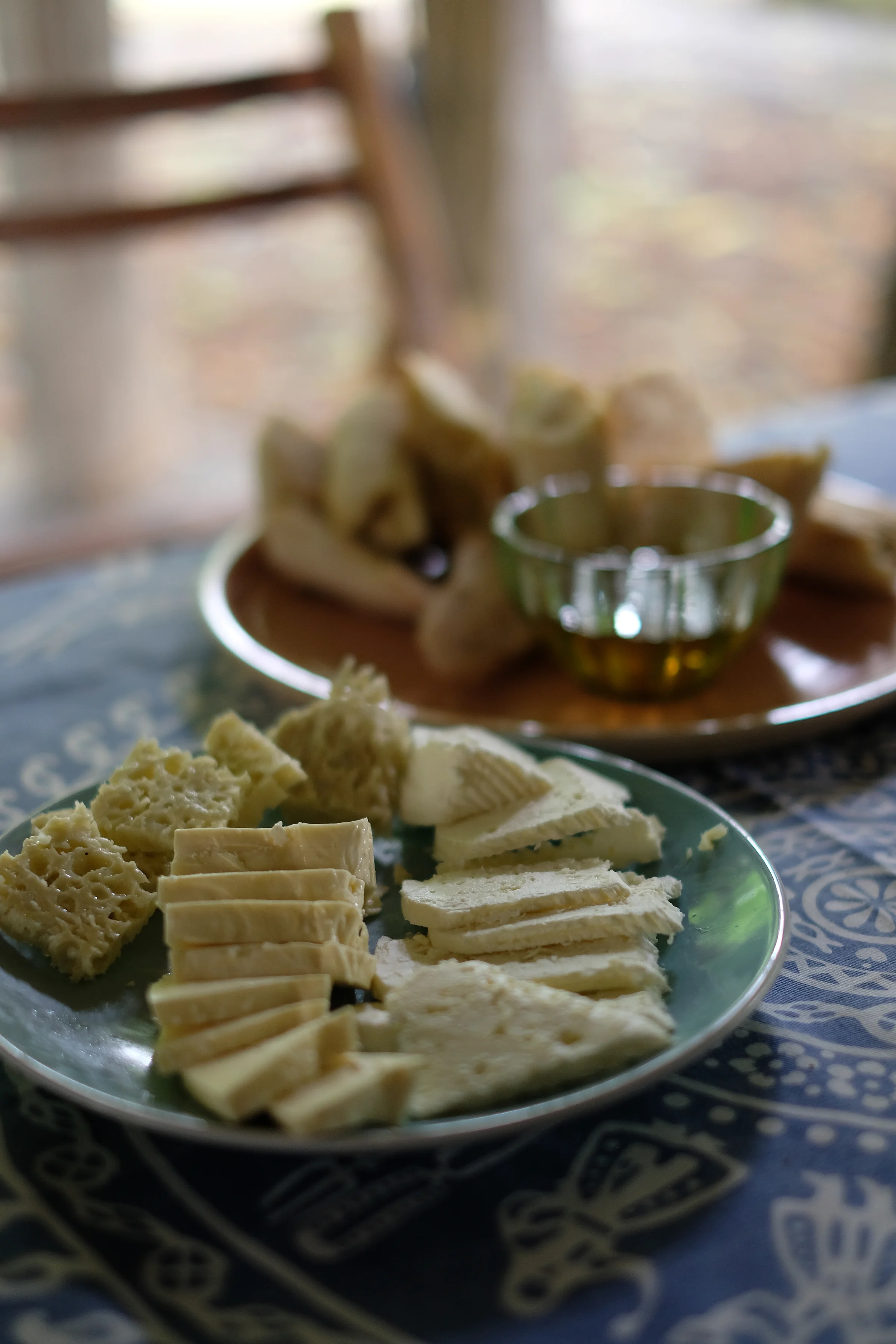
We tasted the wines in the garden. The table filled slowly: tomatoes, traditional bread and the Kakhetian sunflower oil. There was a sulguni her father had made the day before, and a guda from Tusheti, a sheep’s cheese traditionally kept in the sheep’s skin.
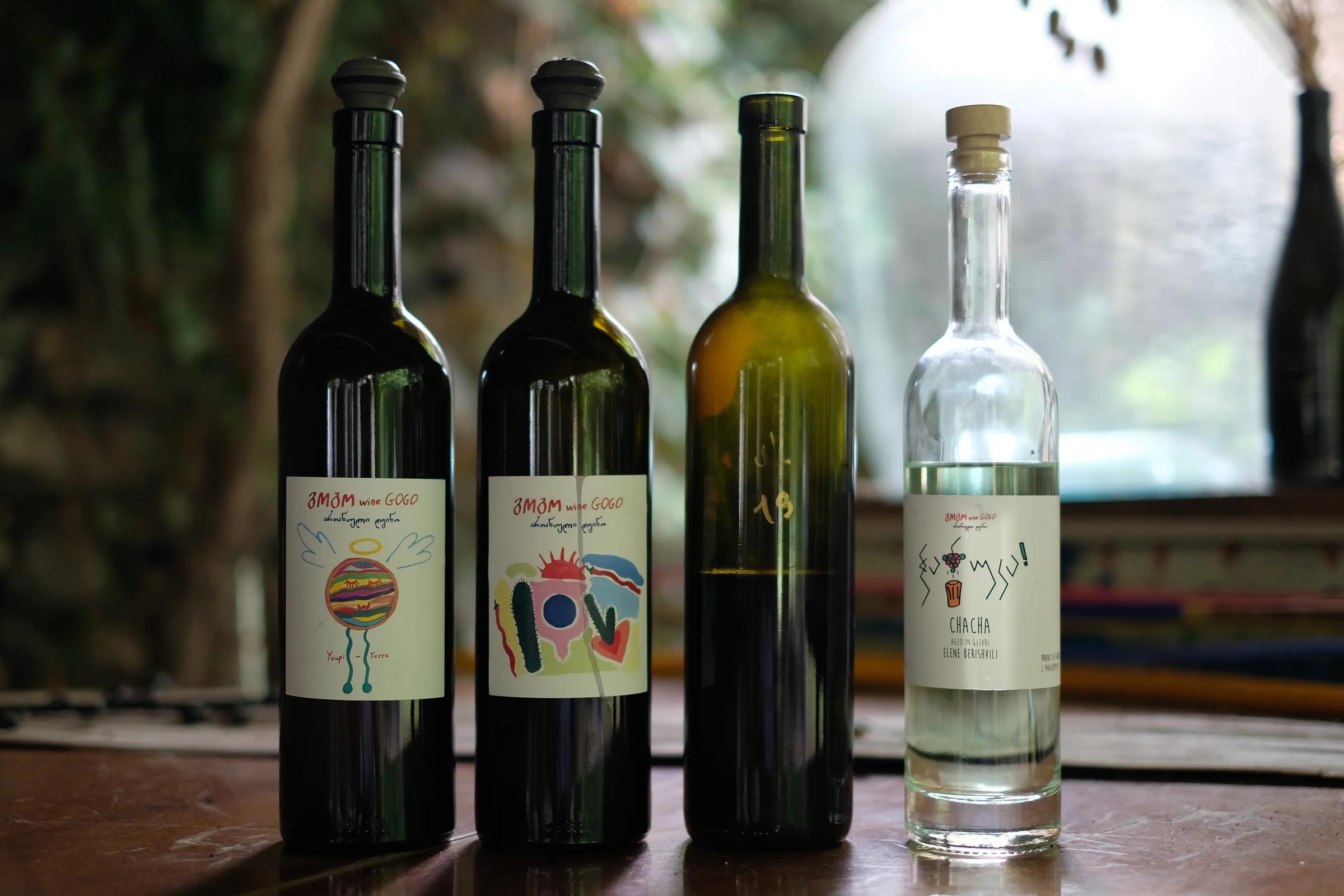
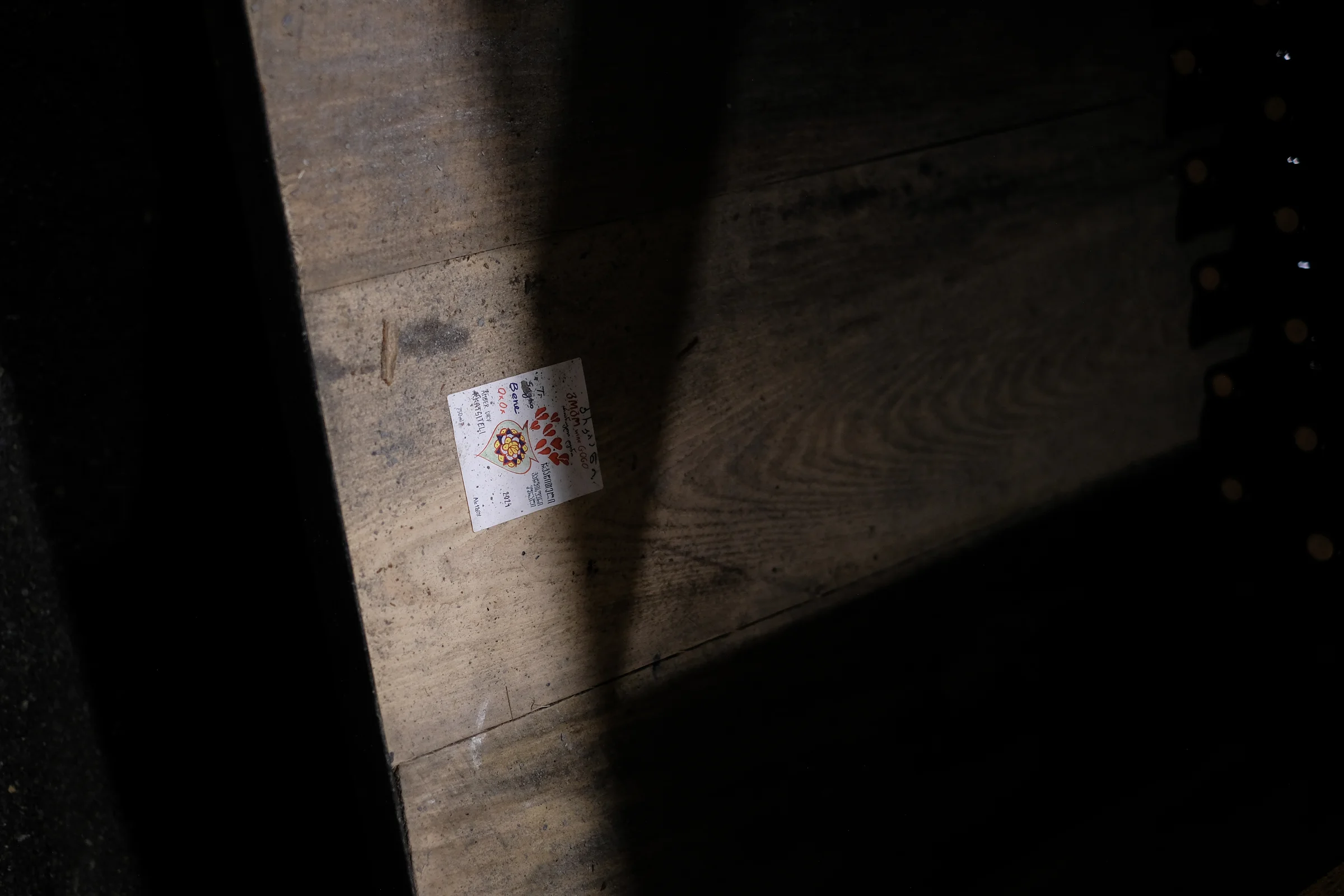
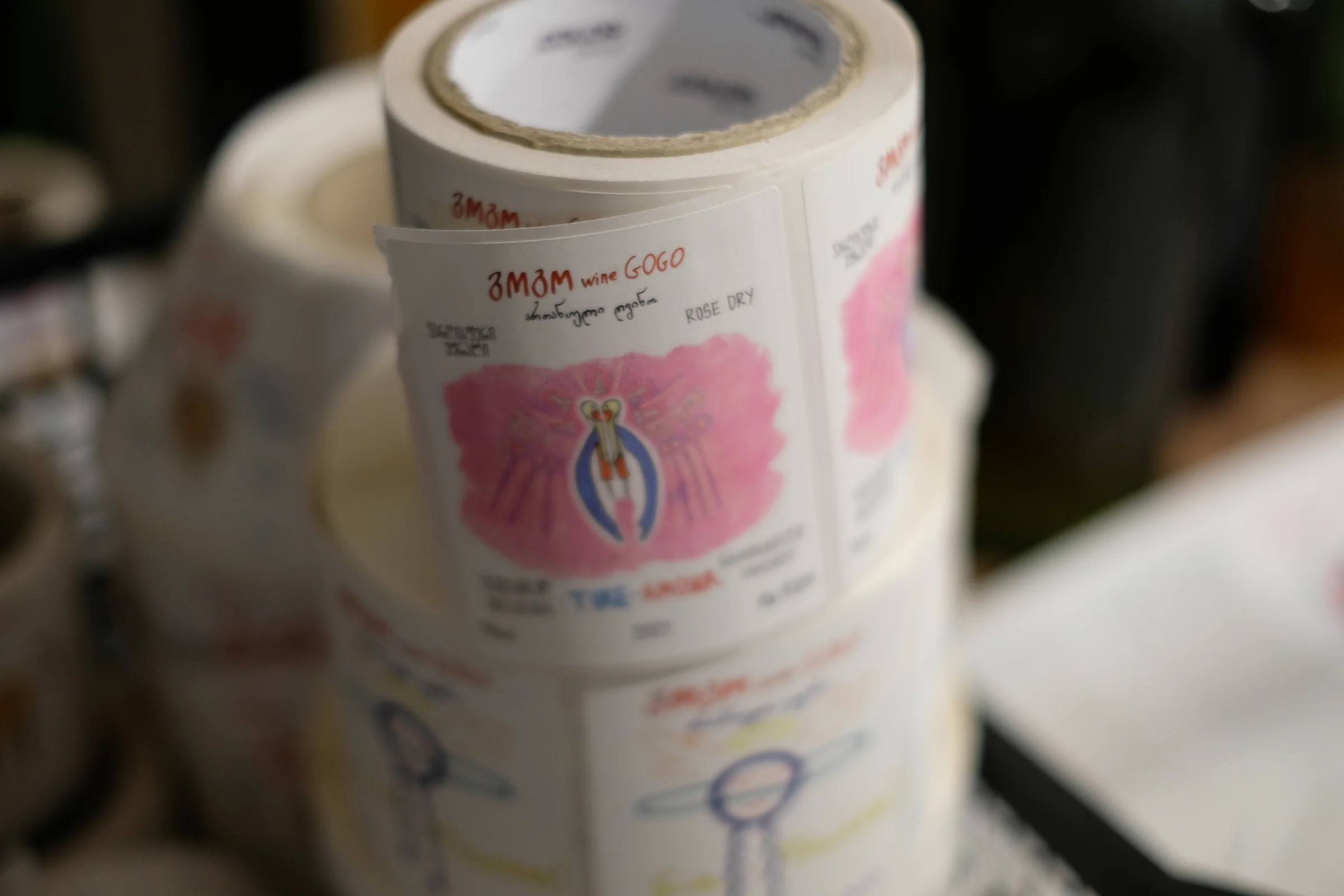
The first wine was Youpi-Terre 2025, Mtsvane and Rkatsiteli, seven months on the skins and then in a glass demijohn, unfiltered and bottled two weeks before we arrived. It was very balanced, with stone fruit and some apple, soft tannins and a beautiful acidity. Keti paints the labels herself.
The second was Saperavi and Rkatsiteli, also 2025, two months on the skins together, in qvevri and stainless steel. In the glass it was violet. The fruit was very dark, and yet the wine held a remarkable balance and a serious structure. Both wines, Keti reminded us, were extremely young.
Besides Saperavi, Rkatsiteli and Mtsvane, there are two rows of a red grape that nobody has been able to identify. They pick it separately and press it by foot, and it gives about fifty litres. The berry has a large seed and little juice, and the must is darker than Saperavi’s from the moment it is pressed, darker still as it ferments. It goes into glass, is racked off its sediment and bottled. There is no label and none of it is sold. We told her that in Portugal, when nobody knows what a grape is, people say old vines and leave it at that. Keti called hers a Kinder Surprise: some years it comes out sparkling, some years sweet, some years very acidic.
The bottle she opened was from 2019, the year written on the glass. It was very mineral, with dark fruit, and the tannins were still firm and fresh. When it was young, we thought it must have been close to a Bairrada Baga. Keti attributed the minerality to the place: this is where the mountains begin, and the vineyard lies between three rivers. They add no sulphites at any stage, not even before bottling. The oldest bottles they keep are from 2010, and they are still drinkable.
Then Elene’s chacha, aged in qvevri and made with tarragon. It was delicate and aromatic, the most interesting chacha we tasted in Georgia.
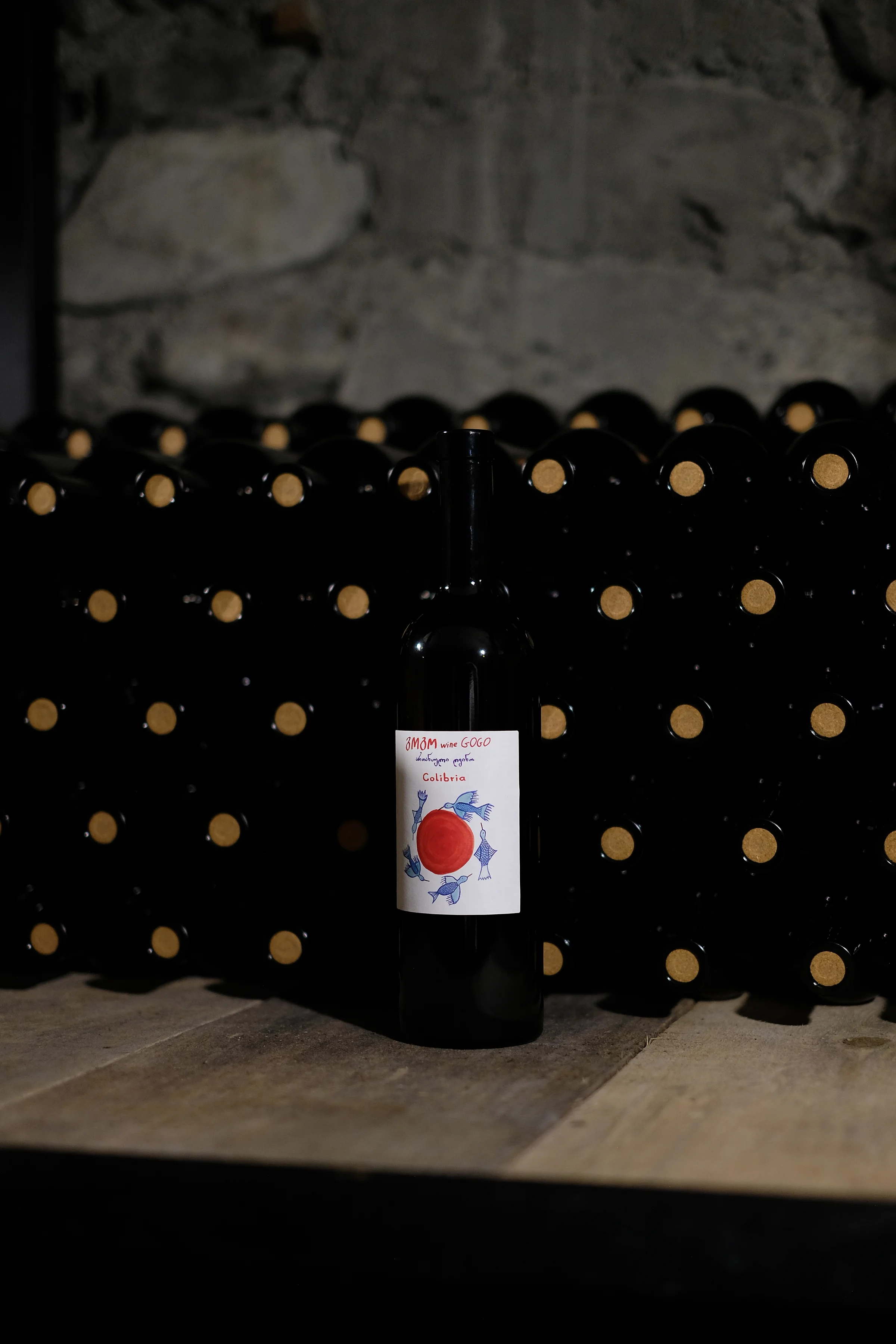
At the end Keti took us to the room where they bottle, with a cellar below for ageing, where the bottles lie in stacks. Each label, she said, has its own story. She gave us labels, the stickers she paints for each wine, and signed one of them. We are still deciding what to make of them, but we think we will arrange them in a frame, as a collage.
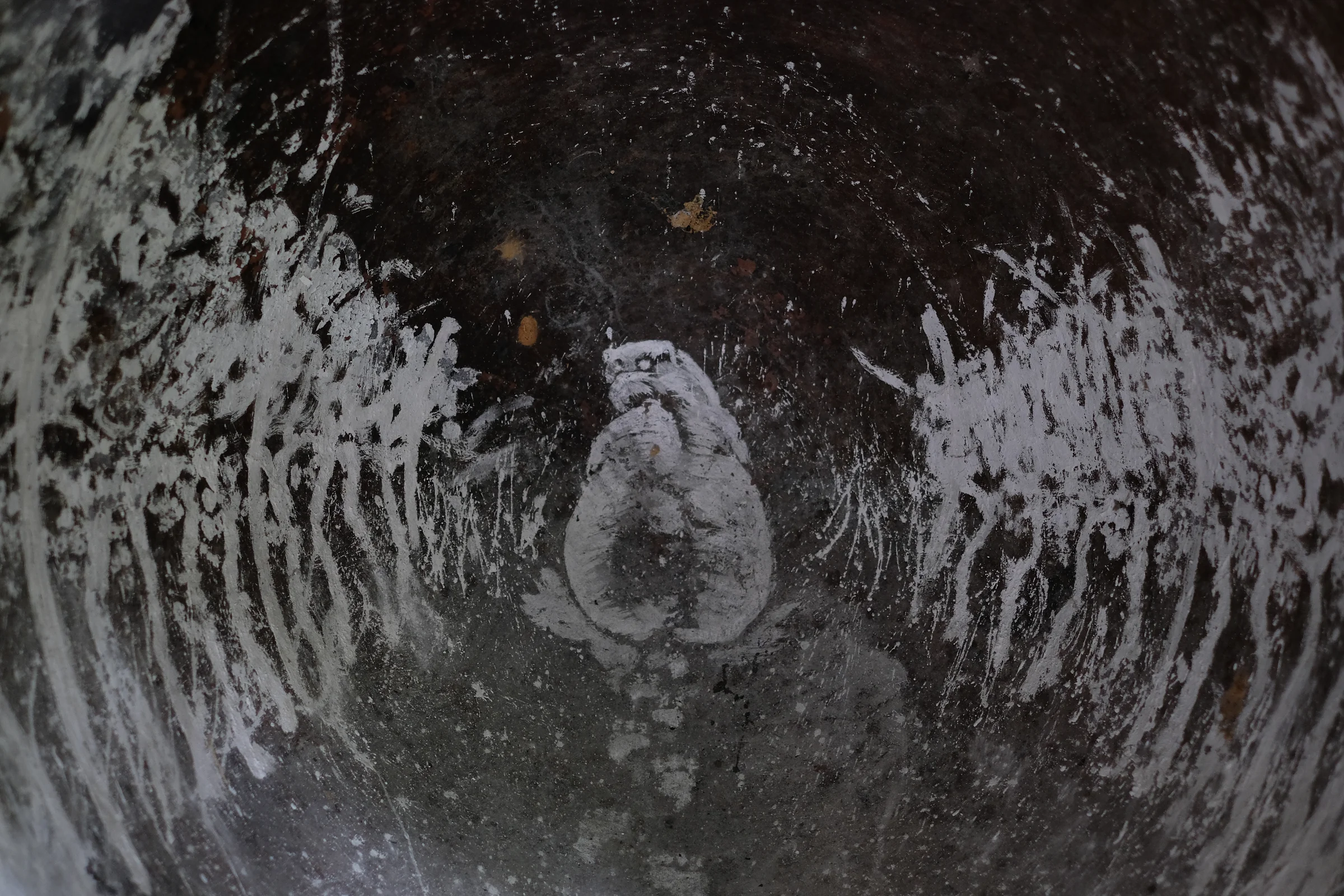
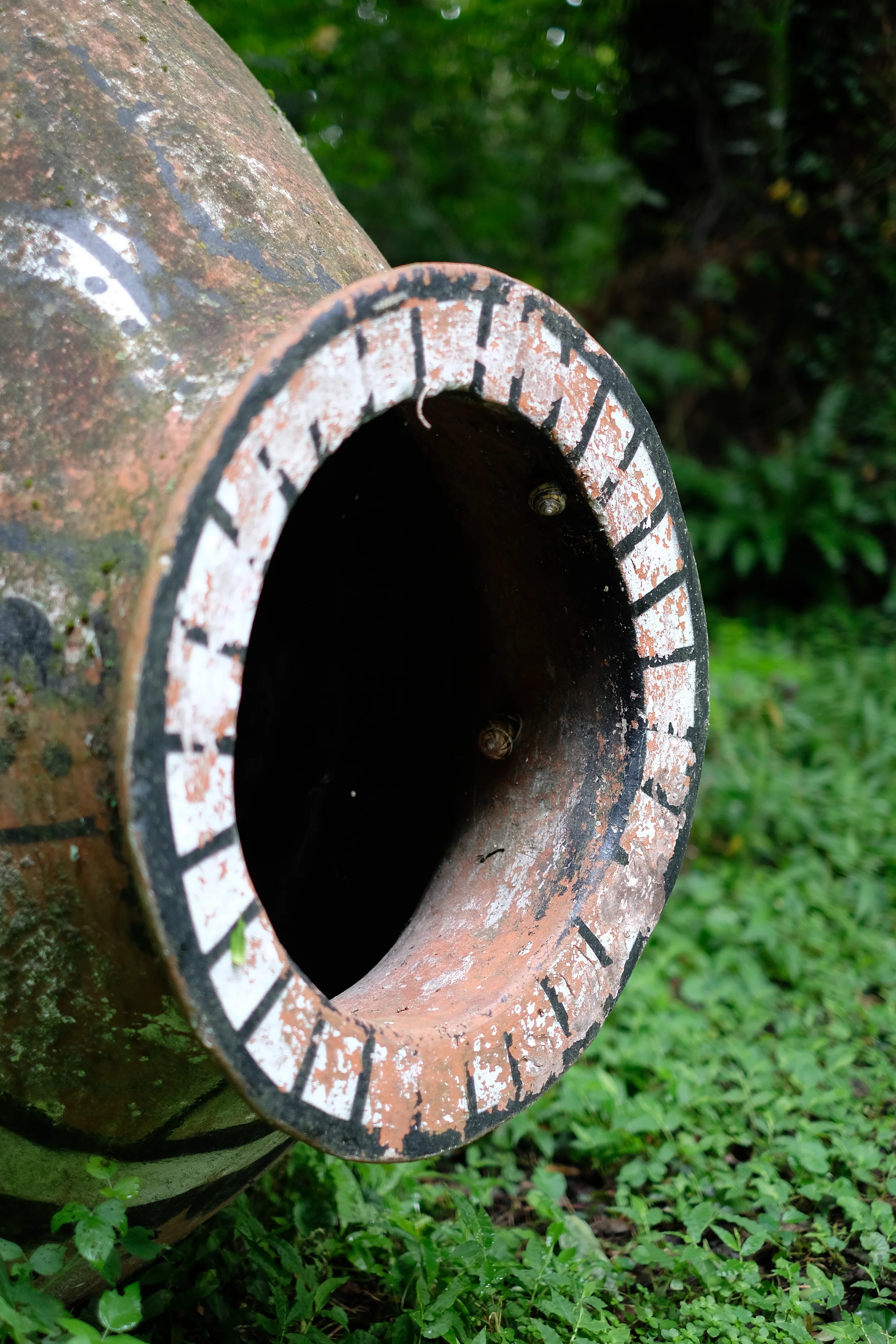
On the way out we stopped again at the qvevri in the garden. A friend of Keti’s had painted it, in black and white bands and rows of dots that the moss is slowly taking back. Snails had settled inside its mouth. We bent down to look in. The friend had painted there too.