The bus driver thought we were feeling ill. We were trying to get off in the middle of nowhere and, to her, our hesitation meant that we could not possibly want to leave the bus there. We assured her that we did. We had spent the morning at Teide and were now following the address Claudio had sent.
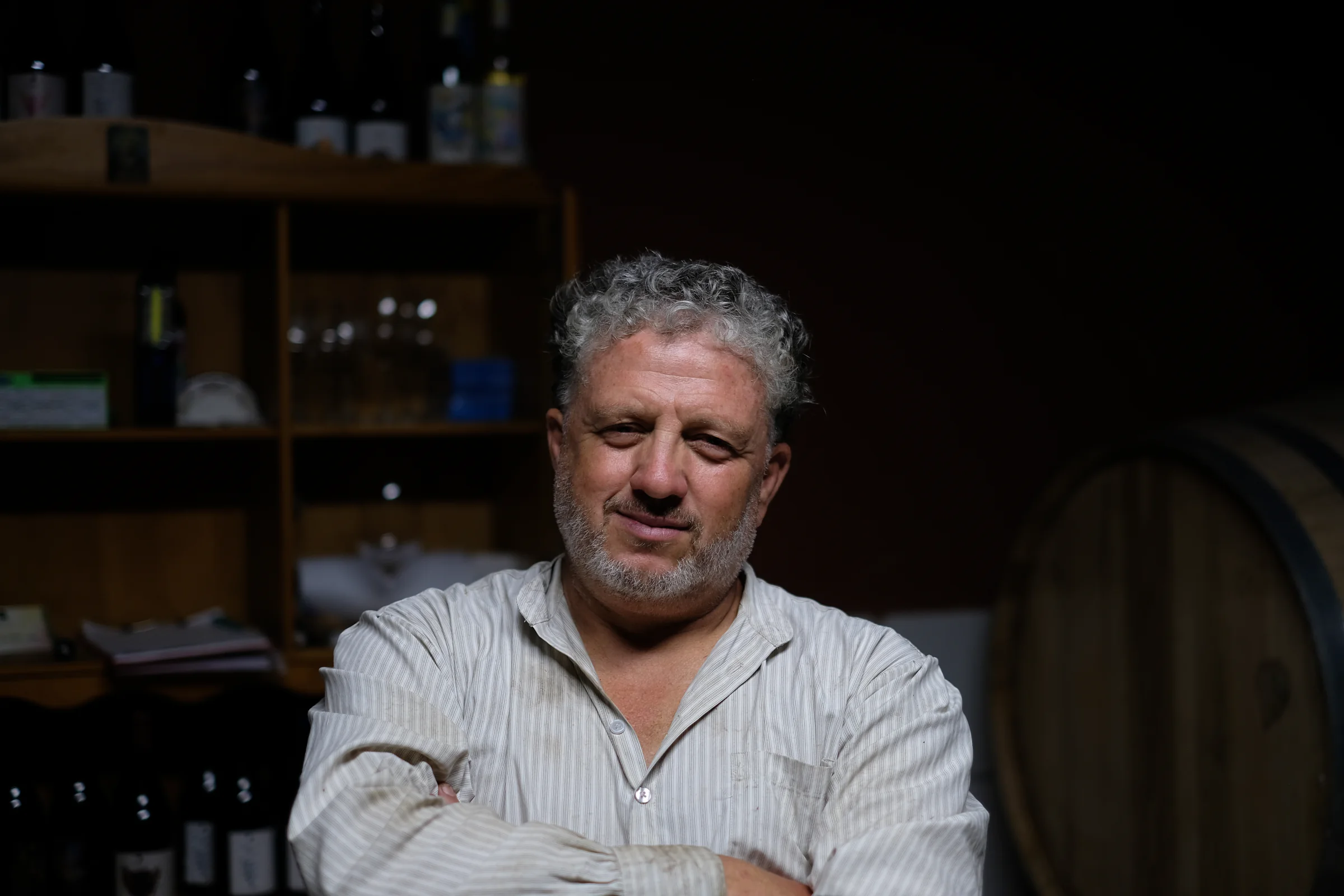
It was close to four in the afternoon when we got out. From the road, the street dropped at an absurd angle towards the house. We followed it down, went through the gate and Claudio Miguel Luis Lorenzo led us into a small room. We stayed there for more than an hour and a half, tasting and talking. We did not visit the vineyards that day. We had arrived during harvest and Claudio had stopped work to receive us.
He did not appear especially troubled by the interruption. Bottles came out and the conversation moved between vineyards, barrels, mistakes, island history and whatever else occurred to him. Later, when the cameras appeared, his clothes still stained from harvest became part of the joke: at least nobody could doubt that he worked there.
Claudio uses one word repeatedly for that work: viñador. He means someone who tends the vines, makes the wine and sells it without separating those jobs. He does not buy grapes. Most of the vineyard work is his, with occasional help, and much of it cannot be mechanised. Boxes may have to be carried one or two hundred metres before they reach a vehicle.
The vineyards themselves resist easy work. In the Orotava Valley, the old cordón trenzado can run horizontally for twenty metres or more. In La Victoria de Acentejo, the low mesa or parral bajo requires a different kind of patience: pruning, tying and working close to the ground, all by hand. Claudio spoke about vines of 150, 200, 300 and even 400 years as working plants rather than museum pieces.
He learned how to look after them from an older farmer after moving to a vineyard in 2012. The methods belonged to a period before herbicides, standard planting plans and the push towards easy mechanisation. Claudio has seen what followed: old vines pulled out, international varieties planted in rows, and training systems adapted to tractors rather than to the place.
He is not doctrinaire about it. Some of the Syrah planted during that period remains in his vineyards because he likes the wine it gives. “No hay que ser radical tampoco,” he said. It was one of several moments when a grand theory was cut down to a practical decision.
The same applies in the cellar. Claudio began making wine with sulphur and released his first vintage without it in 2017. That wine was severely reduced. Years later, after a long rest in bottle, it had recovered into something he was proud to pour. Other experiments ended as vinegar. An orange wine had to be made away from home when the Tenerife fire came close to the house; without the attention it needed, the wine was lost.
He did not tell these stories as heroic failures. They were simply part of working without a recipe. He distrusts the idea that a wine should taste the same every year. Coca-Cola was his comparison. He accepts that the alternative includes bad decisions and ruined wine. His answer to acidity is not tartaric acid or water in the cellar, but dry farming and an earlier harvest.
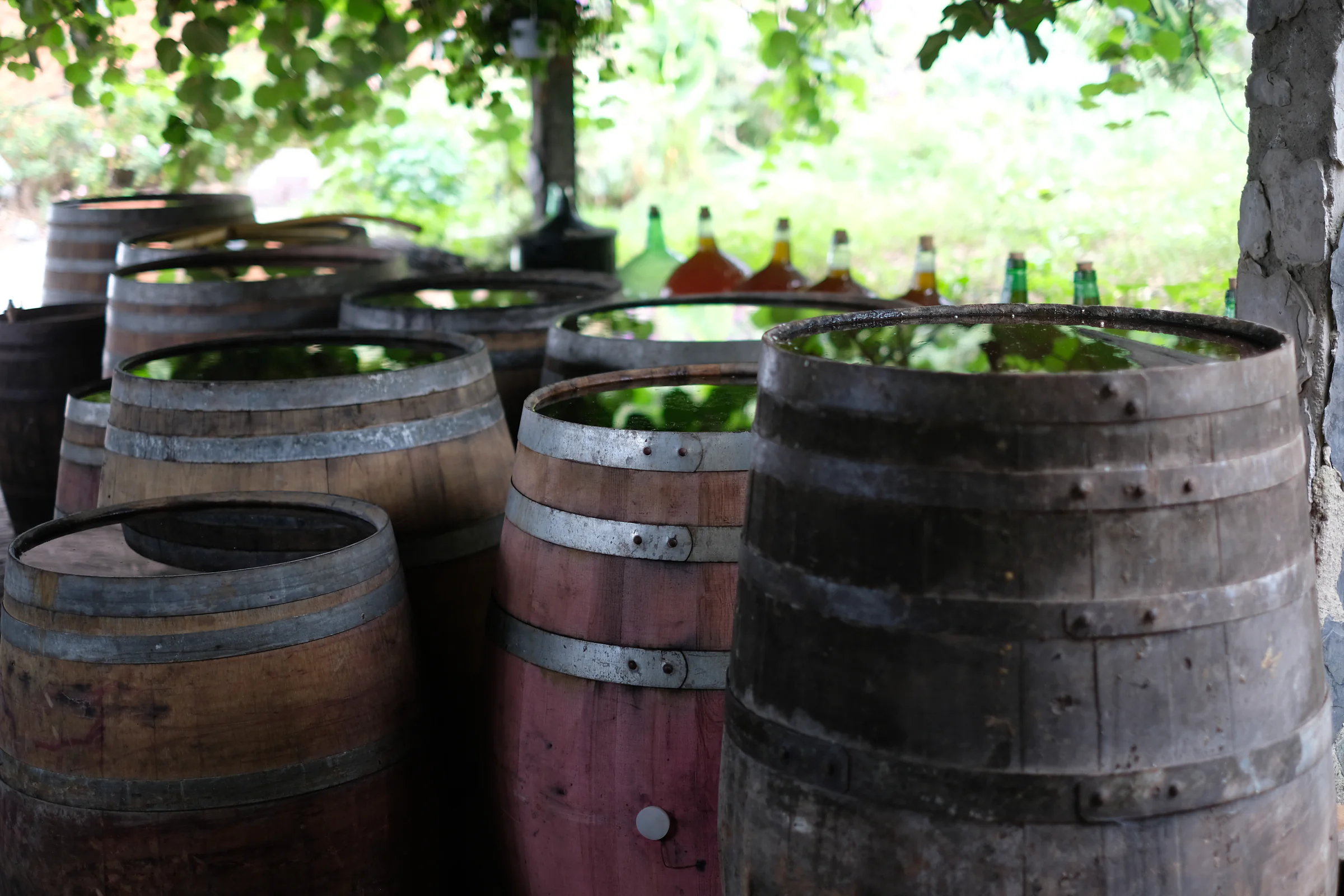
There is plenty of experimentation, though never for novelty alone. Used French oak is valuable because it no longer tastes strongly of oak. He wants a barrel to become “un recipiente vivo,” not to leave a flavour. For Pinarius, he uses a barrel roughly two hundred years old, made from tea, the resinous heartwood of Canary Island pine. The wine stays there for 21 days. Any longer and the wood overwhelms it with forest, mint and eucalyptus.
We tasted several of the 2022s and talked through each one. When Claudio poured El Roque, we stopped talking for a moment.
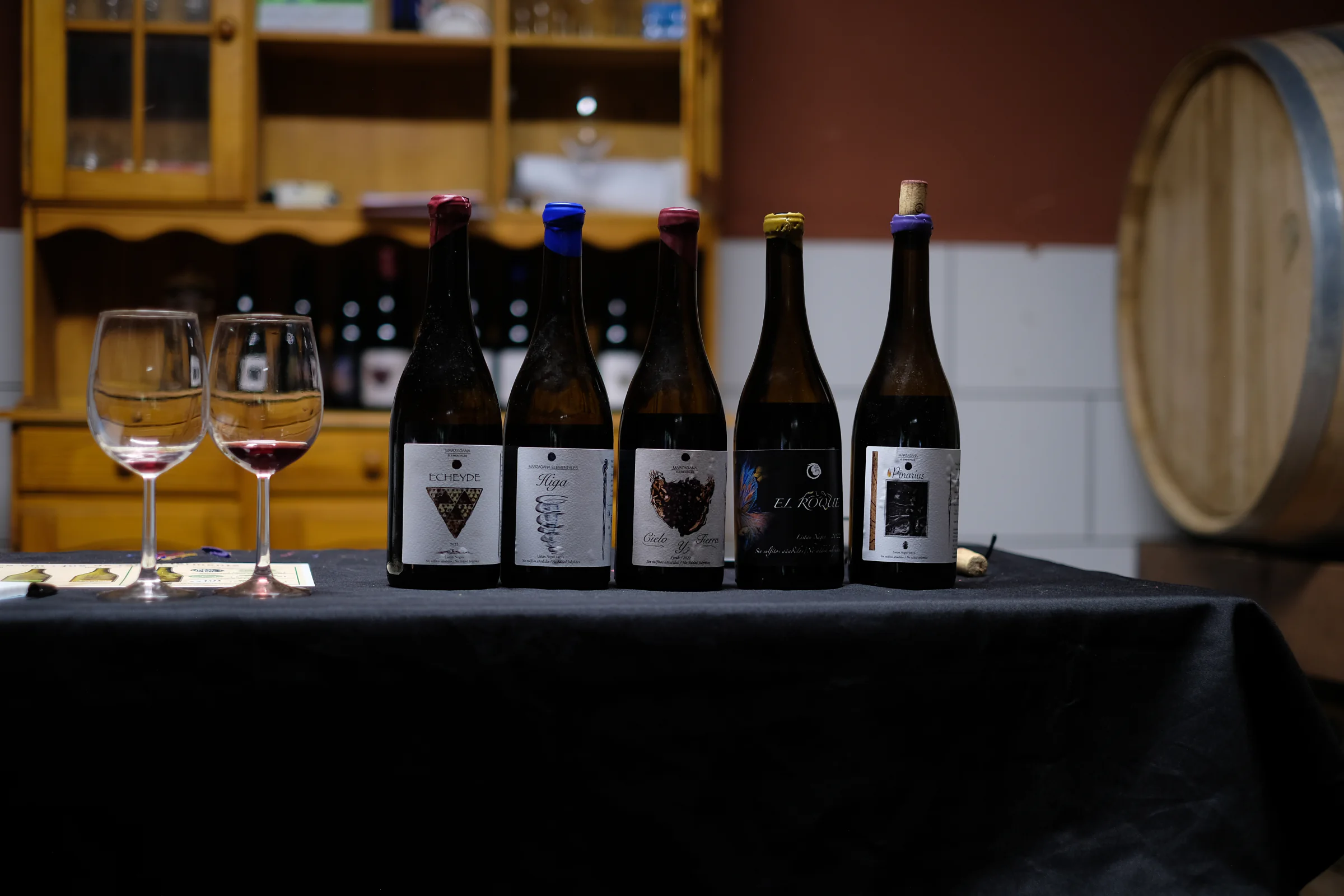
El Roque 2022 is Listán Negro from a high vineyard in La Victoria, around 720 metres above sea level. The vines, planted before phylloxera, are extraordinarily old; some are more than three centuries into their lives. That fact almost invites the wrong expectations. A wine from vines of that age ought, according to the usual script, to announce its depth and importance.
El Roque did the opposite. It was elegant, restrained and remarkably well proportioned. Nothing stood out because nothing needed to. It was the wine of the afternoon, by some distance. The age of the vines never became weight in the glass.
At one point Claudio said, “Es complicado emocionar.” It is difficult to move someone. El Roque did. We had talked about altitude, basalt, clay, old wood and long cordons. The wine needed none of those explanations once it was in the glass.
More than ninety minutes later, Claudio still had a harvest day to finish. We went back through the gate and started climbing towards the road. The incline we had joked about on the way down was less funny on the way back up.